I started paying attention to millets the way most people in Bangalore probably did — because ragi mudde showed up on my plate long before “ancient grains” became a marketing phrase. But it wasn’t until I started tracking these dishes across other states, on trips that had nothing to do with food research, that I realized how differently the same handful of grains behave depending on which kitchen they land in. Same seed, completely different dish. This is the trail, state by state, as I actually ate it.
Key Takeaways
- Millets aren’t one cuisine — they’re dozens. The same grain (ragi, jowar, bajra) turns into entirely different dishes depending on the state: stiff dough in Karnataka, fermented soup in Odisha, fried snacks in Gujarat.
- Ragi alone shows up four different ways across this trail — as mudde (Karnataka), kali (Tamil Nadu), sangati (Andhra/Rayalaseema), and mandia pej (Odisha) — with almost nothing in common except the flour.
- Texture, not flavor, is often the real regional signature — whether a dish is stiff, fermented, fried, or porridge-like says more about the region’s climate and meal structure than the grain itself.
- Bajra swings from dessert to snack to porridge within just two neighboring states (Rajasthan and Gujarat), showing how far one millet can stretch.
- This trail is the “why” behind cooking technique, not a health pitch — the focus throughout is what these dishes taste and feel like, not nutrition claims.
Karnataka: Ragi Mudde
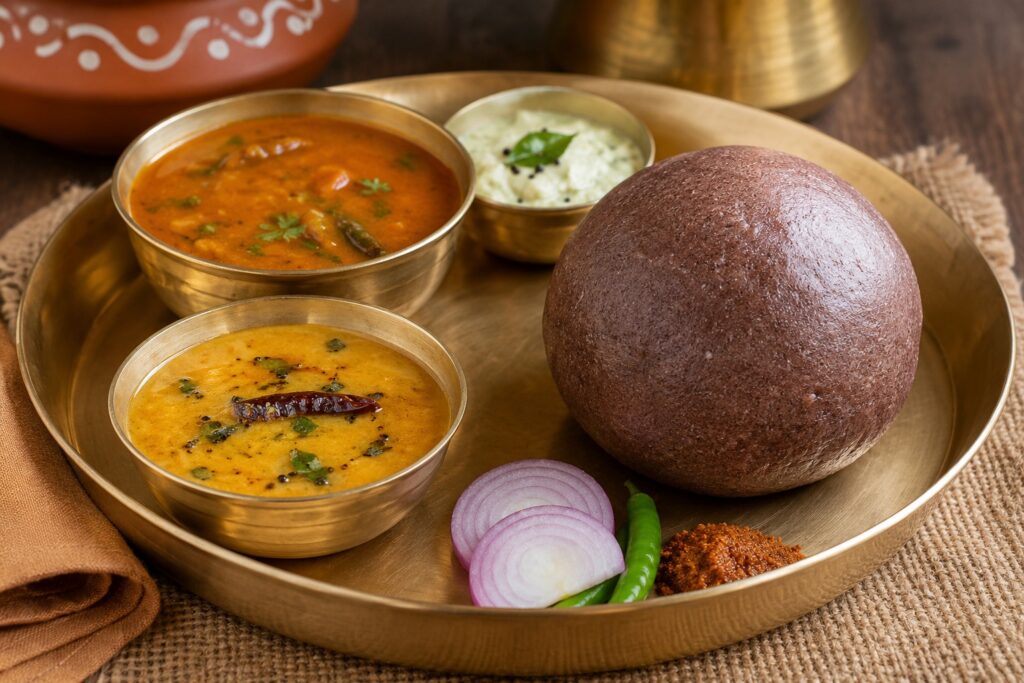
Home turf, so I’ll be honest about my bias — I think ragi mudde is one of the more physically satisfying things you can eat, and also one of the most misunderstood by anyone who’s only had it described rather than shown. It’s finger millet flour worked into boiling water until it turns into a stiff, glossy dough, then rolled into a fist-sized ball.
You don’t chew it so much as tear off pieces and swallow them with saaru (a thin, peppery dal) or a spicy meat curry. The texture is the whole point — dense, slightly sticky, made for scooping rather than biting. I’ve had bad versions (gummy, undercooked) and good ones (smooth, no lumps, disappears fast), and the difference is entirely in the wrist technique of whoever’s stirring the pot.
Tamil Nadu: Ragi Kali and Kambu Koozh
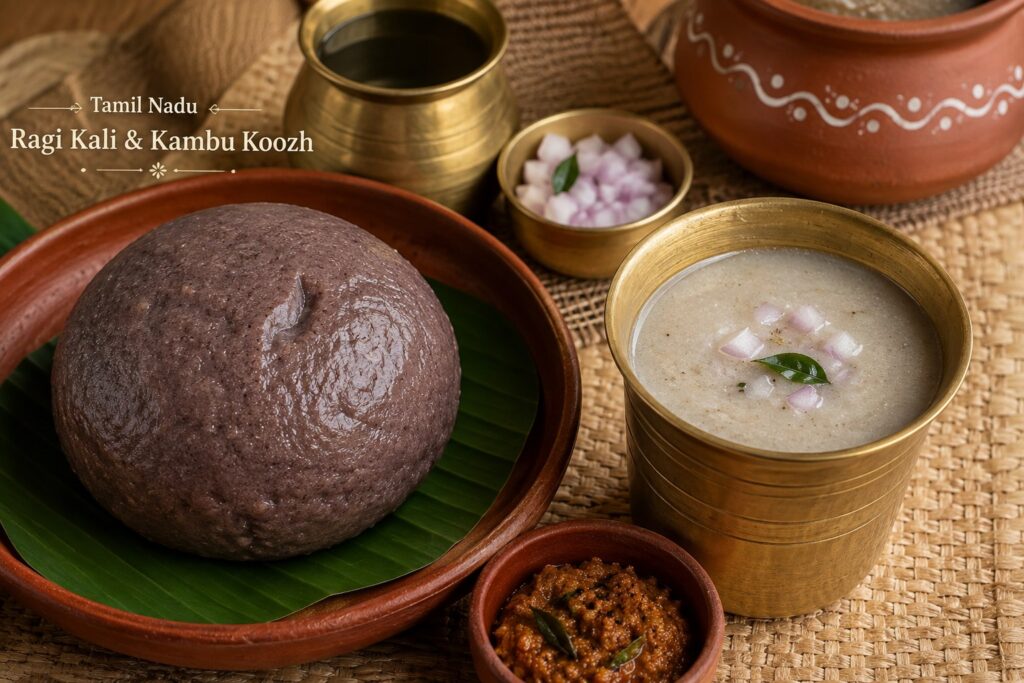
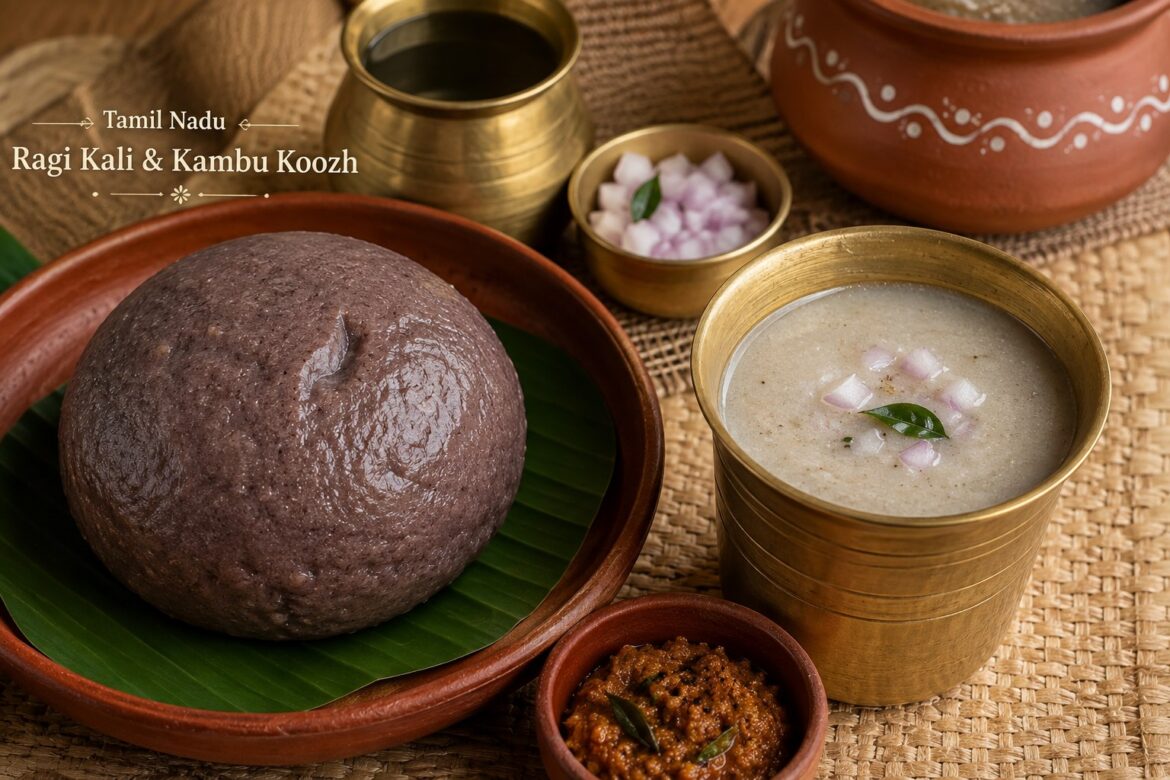
Cross into Tamil Nadu and the same finger millet turns into ragi kali — visually almost identical to mudde but usually served looser, sometimes sweetened, sometimes savory depending on the household. What surprised me more was kambu koozh, a fermented pearl millet porridge I first had at a small eatery near Madurai, served cold with buttermilk, raw onion, and green chili on the side.
It’s sour in a way that took me two spoons to actually enjoy, and I understood afterward why it’s a summer food — it’s genuinely cooling, and the fermentation gives it a tang closer to idli batter than anything I’d call a “grain dish.”
Andhra Pradesh and Rayalaseema: Ragi Sangati and Jonna Rotte
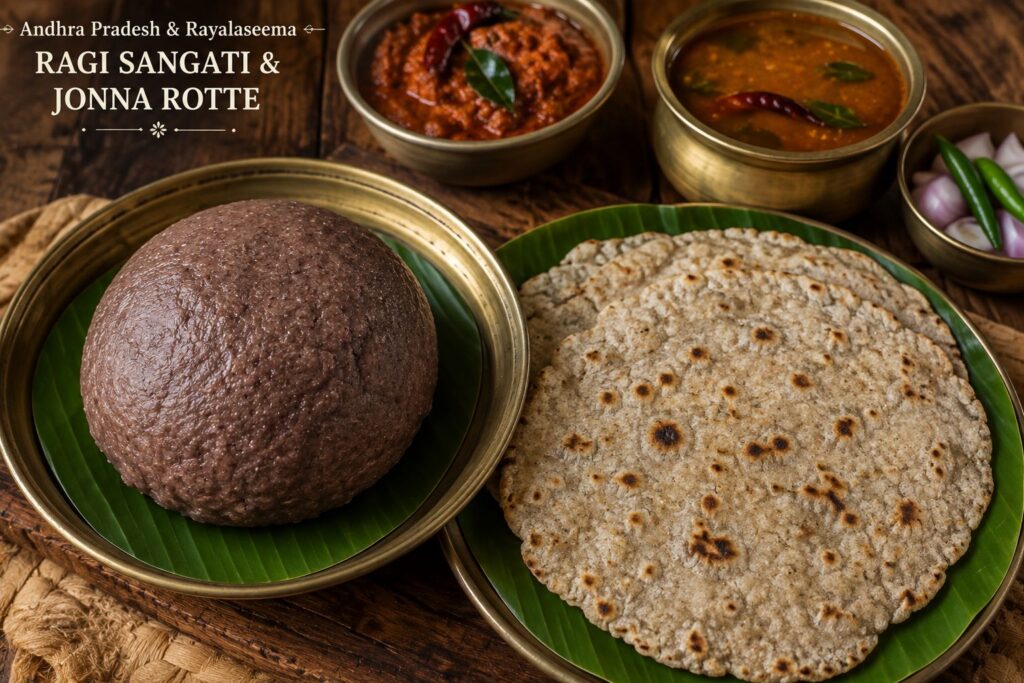
In the Rayalaseema belt, ragi mudde goes by ragi sangati and shows up alongside jonna rotte — a thin, slightly brittle sorghum flatbread that’s nothing like the softer jowar rotis I’d later have in Maharashtra. What stuck with me was how central sangati is to the everyday meal structure here, not a “millet dish” being reintroduced but one that never left. I had it with a fiery gongura (sorrel leaf) curry that did most of the work — the sangati itself is deliberately neutral, built to carry whatever’s next to it.
Maharashtra: Jowar Bhakri and Thalipeeth
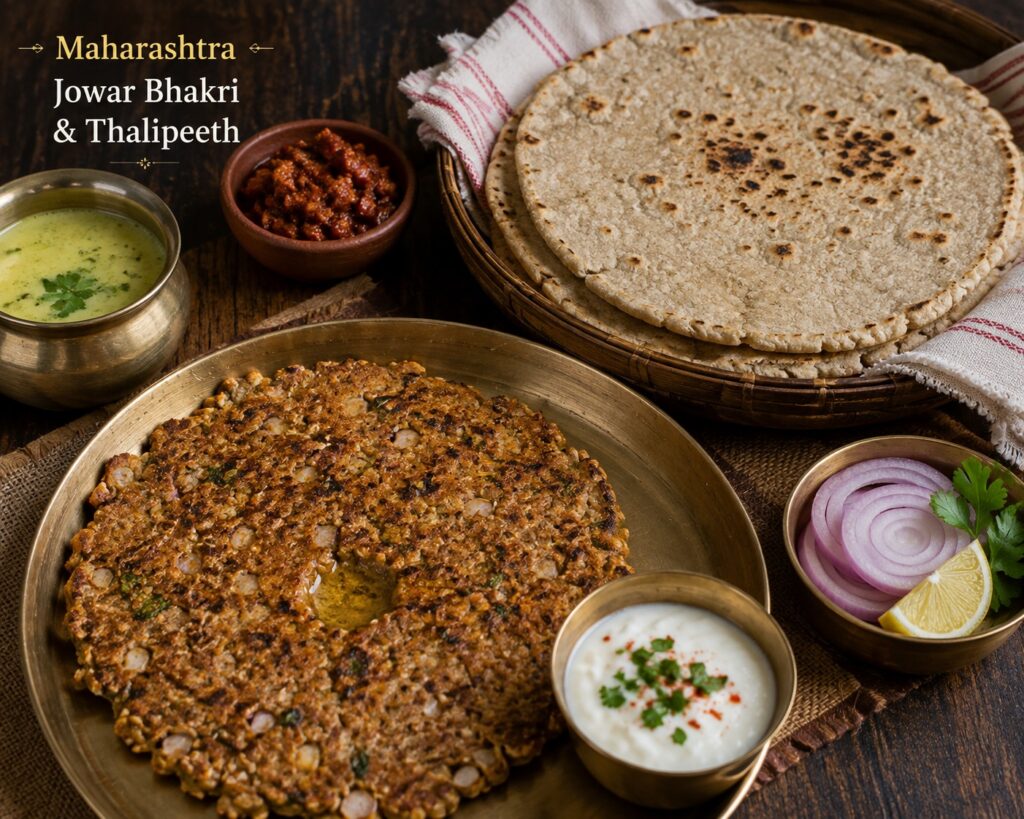
Maharashtra was where jowar (sorghum) stopped being “the other millet” for me. Jowar bhakri — a hand-patted, unleavened flatbread — is thinner and more pliable than bajra roti, and a good one puffs slightly on the tawa the way a roti does. Thalipeeth was the bigger discovery: a multigrain flatbread made from bhajani, a roasted flour blend of jowar, bajra, ragi, and lentils, mixed with onion, coriander, and spices straight into the dough. I had mine at a small breakfast place in Pune with a dollop of white butter melting into it, and it’s the one dish on this list I’ve genuinely tried (unsuccessfully, twice) to recreate at home.
Rajasthan: Bajra Churma and Khees
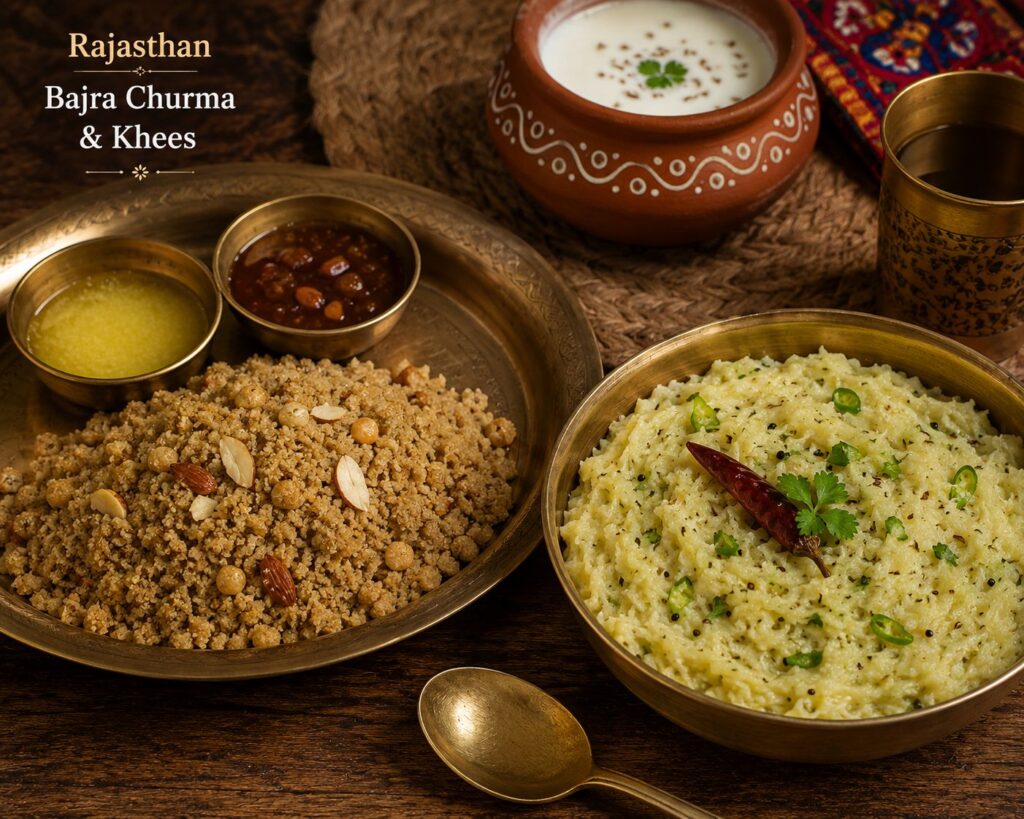
Rajasthan is bajra’s home state in the way Karnataka is ragi’s, and the range of dishes reflects that. Bajra churma — coarsely pounded roti mixed with ghee and jaggery — is closer to a dessert than a meal, dense and sweet enough that a small portion goes a long way. Khees, a savory bajra porridge-like dish I had at a dhaba outside Jodhpur, was the more everyday version: simpler, less rich, clearly built for a working day rather than a festival. The contrast between the two dishes says something about how the same grain gets stretched to cover both ends of a meal.
Gujarat: Bajra Vada and Bajra Raab
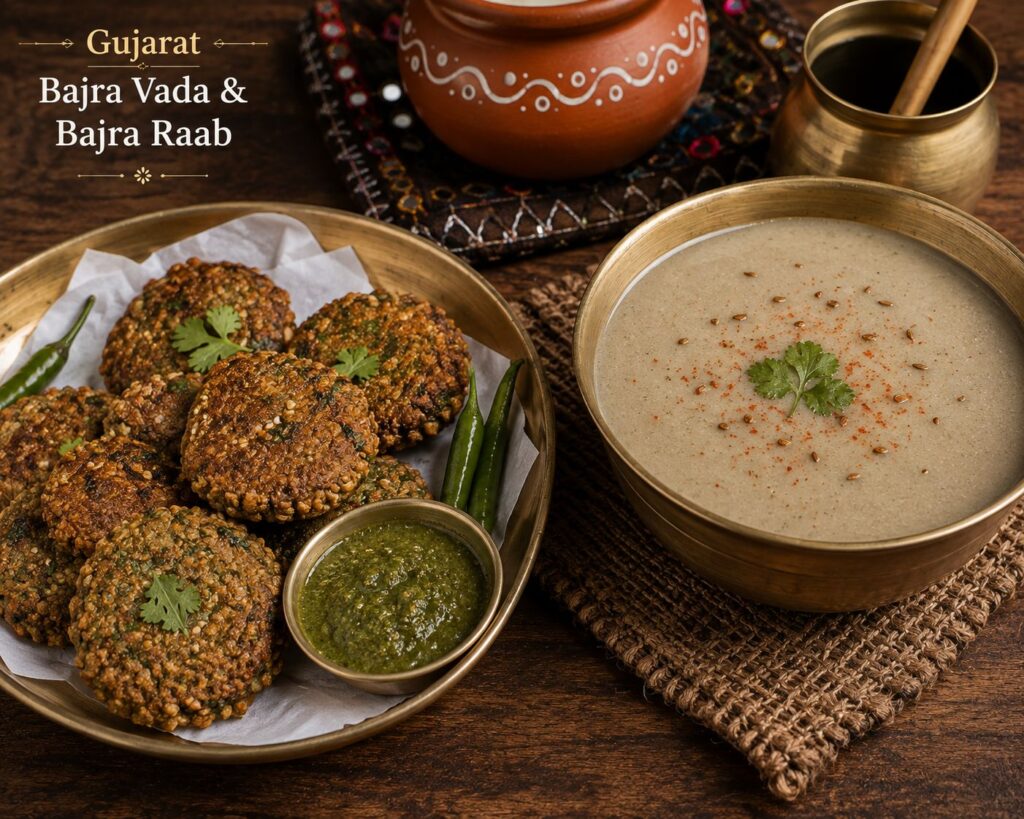
Gujarat takes bajra in a different direction again — bajra vada, a fried snack spiked with fenugreek, was crisp in a way I didn’t expect from a millet-based dough, closer to a savory doughnut than a fritter. Bajra raab, a mildly sweet, ghee-roasted porridge, was the counterpoint: soft, warm, clearly a monsoon-season comfort food rather than something you’d eat mid-afternoon. I had both within the same trip, a day apart, and they didn’t taste like variations on a theme so much as two entirely different uses for the same flour.
Odisha: Mandia Pej
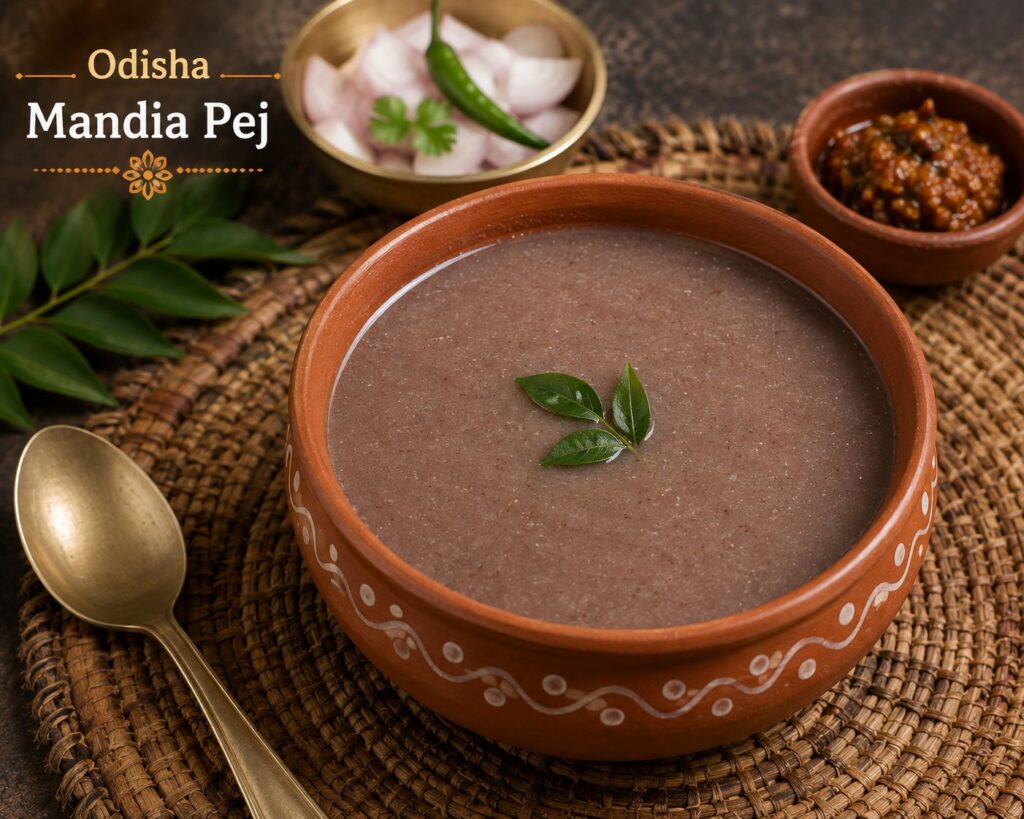
The furthest departure from anything I’d had before was mandia pej, in the tribal belt of southern Odisha — Koraput and the districts around it. It’s a soup built from finger millet and fermented rice water, traditionally served to guests and, in the coastal areas, especially popular through summer. What I had, in a homestay kitchen, was tangy, thin, almost drinkable rather than spoonable, finished with a rough paste of green chili, coriander, and mango ginger stirred in at the end. It bears almost no resemblance to ragi mudde beyond sharing a grain — proof, if I needed it, that “millet food” isn’t one cuisine, it’s dozens.
The Trail at a Glance
| State | Millet | Signature Dish | Texture |
|---|---|---|---|
| Karnataka | Ragi (finger millet) | Ragi Mudde | Dense, stiff dough |
| Tamil Nadu | Ragi / Bajra | Ragi Kali, Kambu Koozh | Loose porridge, fermented |
| Andhra Pradesh (Rayalaseema) | Ragi / Jowar | Ragi Sangati, Jonna Rotte | Stiff dough, brittle flatbread |
| Maharashtra | Jowar | Bhakri, Thalipeeth | Pliable flatbread |
| Rajasthan | Bajra | Churma, Khees | Dense-sweet, porridge |
| Gujarat | Bajra | Vada, Raab | Crisp fried, soft porridge |
| Odisha | Ragi (mandia) | Mandia Pej | Thin, fermented soup |
What This Trail Actually Taught Me
The biggest shift in how I think about millets happened somewhere between the Rajasthan and Odisha stops. It’s easy, sitting in Bangalore, to think of “millet food” as a single category — one grain, one health story. Eating my way across these states made it obvious that’s backwards. The grain is almost incidental; what changes everything is what a region does with it — fried or fermented, sweetened or left neutral, built for a festival or an ordinary Tuesday. If you’re curious about cooking with any of these at home, I’ve written up the flours themselves and how they behave in my kitchen in the Millets 101 guide — this trail is really the “why” behind that guide.
FAQs
What’s the difference between ragi mudde and ragi sangati?
They’re close relatives — both are stiff, worked dough made from finger millet — but sangati (Andhra Pradesh/Rayalaseema) tends to be paired with sharper, more sour curries like gongura, while mudde (Karnataka) is more often served with a thinner, peppery dal or meat curry.
Which millet dish is easiest to try first if I’ve never had one?
Jowar bhakri or thalipeeth from Maharashtra are the most approachable starting points — both are flatbreads with a texture close to regular roti, without the fermented tang of something like kambu koozh or mandia pej.
Is kambu koozh the same as ragi mudde?
No — kambu koozh is a fermented pearl millet (bajra) porridge served cold, usually with buttermilk and raw onion, while ragi mudde is a hot, stiff finger millet dough. They’re both South Indian millet staples but nothing alike in texture or serving style.
Why does the same millet taste so different from state to state?
It comes down to preparation more than the grain itself — fermentation time, whether it’s fried or boiled, how coarsely it’s ground, and what it’s traditionally served alongside all shift dramatically by region.
Are any of these dishes hard to find outside their home state?
Some, like thalipeeth or bajra vada, have traveled well and show up in pan-Indian restaurants. Others, like mandia pej, are still mostly regional and worth seeking out specifically if you’re traveling through that area.

Rohini writes about home styling, beauty, fashion, food, and travel from Bangalore, India — drawing on her background in interior styling and years of testing what actually works in real homes and everyday routines. Every recommendation here comes from something she’s personally tried, not aggregated advice.