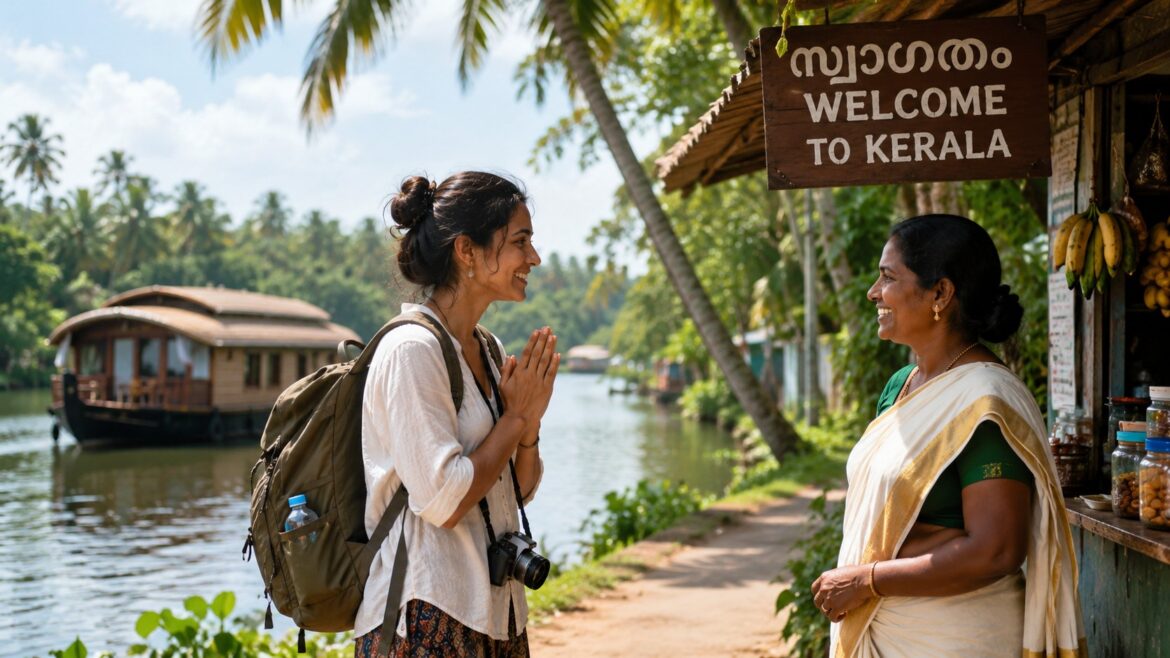
You don’t need to speak fluent Malayalam to travel around Kerala. Learning 20 practical Malayalam words and phrases — covering greetings, food, directions, prices, and basic requests — is enough to make everyday interactions easier and more enjoyable.
I used to walk into Kerala trips armed with nothing but “namaskaram” and a hopeful smile, which gets you exactly as far as you’d think — a polite nod and a conversation that immediately switches to English. It took a few trips and a fair amount of gentle correction from Alappuzha shopkeepers before I picked up the handful of words that actually change how a conversation goes. This isn’t a language course — I’m nowhere close to fluent — it’s the practical shortlist I’d hand a friend before they land in Kochi for Onam.
Key Takeaways
- You don’t need to speak fluent Malayalam to travel in Kerala. Learning 15–20 practical words and phrases can make everyday interactions easier.
- Start with greetings and basic courtesy. Words such as namaskaram (hello), nandi (thank you), and kshamikkanam (sorry/excuse me) are useful almost everywhere.
- Food-related Malayalam is especially practical. Chaya (tea), vellam (water), bhakshanam (food), and oru chaya venam (I’d like a tea) are useful at restaurants, cafés, and local shops.
- Learn a few direction and travel phrases. Words such as evide (where), idathu (left), valathu (right), and nere (straight) can help when getting around.
- Understanding what people say back is just as useful as speaking. Common words such as seri (okay), illa (no/not available), undu (there is/available), and venda (don’t want/no need) can make conversations easier to follow.
- You don’t need perfect pronunciation. A genuine attempt, spoken clearly and politely, is usually more useful than worrying about sounding like a native speaker.
- If you’re visiting during Onam, learn a few festival-specific expressions. Onam ashamsakal (Happy Onam), sadhya (traditional Onam feast), and pookalam (flower decoration) are particularly useful.
Greetings and Basic Courtesy
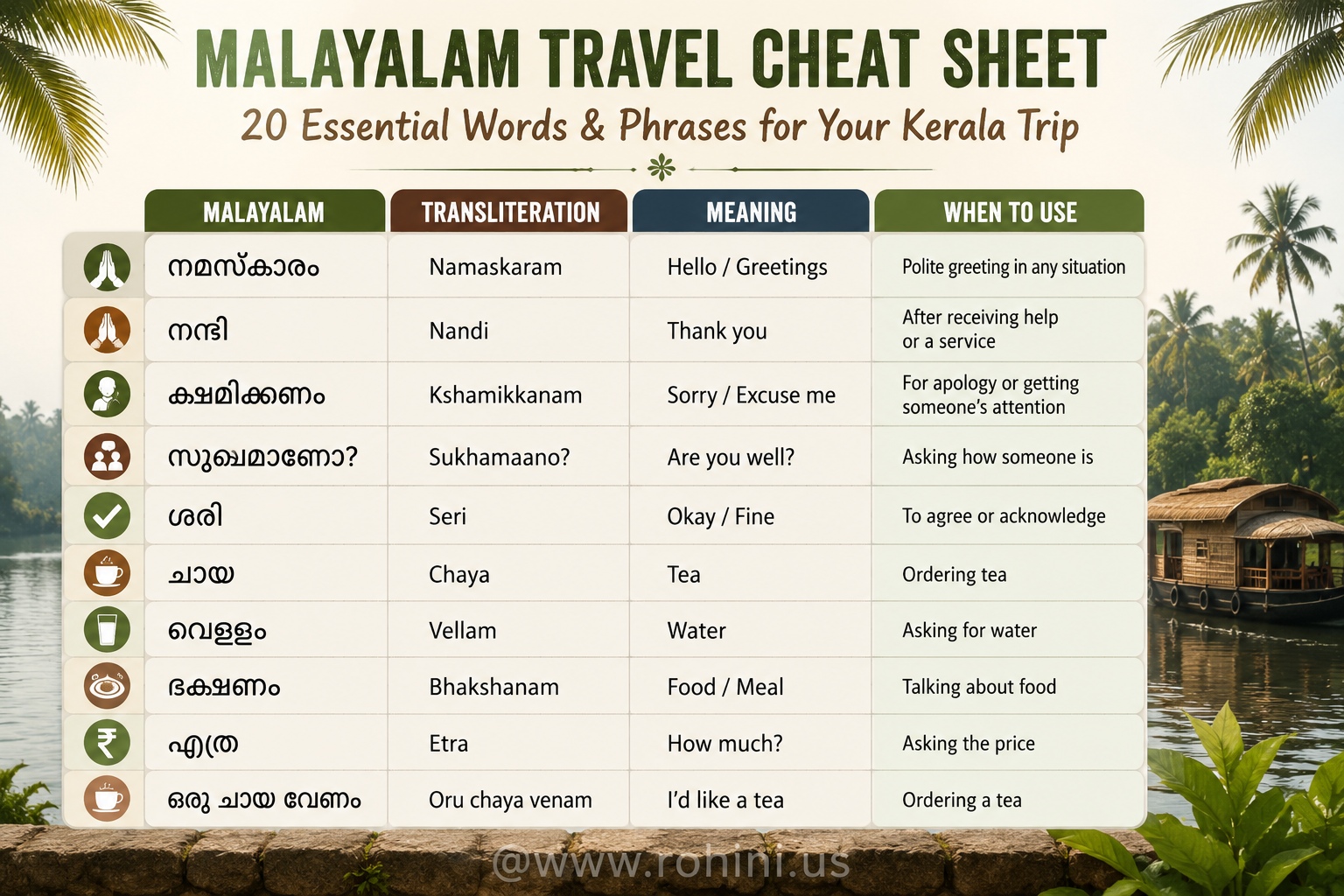
| Malayalam | Transliteration | Meaning | When I Use It |
|---|---|---|---|
| നമസ്കാരം | Namaskaram | Hello | Safe for any situation — shopkeepers, hotel staff, strangers |
| നന്ദി | Nandi | Thank you | Genuinely lands better than English “thank you” |
| ക്ഷമിക്കണം | Kshamikkanam | Sorry / excuse me | Useful for squeezing past someone or getting attention politely |
| സുഖമാണോ | Sukhamaano | Are you doing well? | A nice opener with someone you’ve met before, like a homestay host |
| ശരി | Seri | Okay / fine | The word I use more than any other — closes almost any exchange |
A few pronunciation tips
- Namaskaram — say it naturally rather than stressing every syllable.
- Nandi — roughly sounds like nan-di.
- Seri — roughly se-ri and is commonly used to mean “okay” or “alright.”
- Sukhamaano? — roughly su-kha-maa-no?
You don’t have to pronounce every Malayalam sound perfectly. A friendly attempt usually goes further than worrying about getting every syllable exactly right.
I used to rely almost entirely on “namaskaram”, because it’s the first Malayalam word most visitors learn. It’s perfectly appropriate, but I found that adding a simple “nandi” or “seri” to an interaction felt much more natural.
One small thing worth remembering: “athe” (അതെ) means “yes” in Malayalam, while seri generally means “okay,” “alright,” or “fine.” In casual conversations, you’ll hear different ways of agreeing or acknowledging something depending on the situation.
Food and Ordering
This is where I’ve gotten the most consistent mileage out of a handful of words, especially at smaller tea shops and toddy shops that don’t run English menus.
| Malayalam | Transliteration | Meaning |
|---|---|---|
| ചായ | Chaya | Tea |
| വെള്ളം | Vellam | Water |
| ഭക്ഷണം | Bhakshanam | Food / meal |
| ഇഷ്ടം | Ishtam | I like it / tasty |
| എത്ര | Etra | How much (price) |
| ഒരു ചായ വേണം | Oru chaya venam | I’d like a tea |
The phrase I use most: “Oru chaya venam”
Oru chaya venam (ഒരു ചായ വേണം) literally gives you a simple way to ask for a tea. It’s short enough to remember and useful at roadside tea shops, cafés, restaurants, and small local stalls. I’ve used it in roadside stalls from Fort Kochi to Munnar and it works every time, gets a laugh half the time, and usually the tea arrives faster than if I’d ordered in English.
You can use the same pattern with other things you want. “Venam” is a useful word to recognize because you’ll hear it frequently when talking about wanting or needing something.
And if you’re trying to find out the price, “Etra?” (എത്ര?) is one of the most useful single words to remember.
Getting Around
| Malayalam | Transliteration | Meaning |
|---|---|---|
| എവിടെ | Evide | Where |
| ഇടത് | Idathu | Left |
| വലത് | Valathu | Right |
| നേരെ | Nere | Straight |
| എനിക്ക് [സ്ഥലം] പോകണം | Enikku [place] pokanam | I want to go to [place] |
I’ll admit direction words are the ones I forget fastest under pressure — standing in an autorickshaw queue is not when your brain wants to retrieve vocabulary. What’s worked better for me in practice is naming the place and letting the driver fill in the rest, rather than trying to string together a full sentence.
A simple way to ask for directions
“[Place] evide?” is often enough when you want to ask where a particular place is.
For example:
“Munnar evide?” — Where is Munnar?
You can also use the longer phrase:
“Enikku [place] pokanam.” — I want to go to [place].
For example:
“Enikku Alappuzha pokanam.” — I want to go to Alappuzha.
I still forget direction words faster than I expect to, particularly when I’m standing beside an autorickshaw trying to remember whether idathu is left or right. My practical solution is simple: say the destination first and let the driver fill in the rest. You don’t need to prove that you know Malayalam.
Useful Sentences for Travel
Single words get you a smile, but a full sentence — even a clumsy one — is what actually gets things done. These are the ones I keep coming back to, general enough for any Kerala trip.
| Malayalam | Transliteration | Meaning |
|---|---|---|
| എനിക്ക് സഹായം വേണം | Enikku sahayam venam | I need help |
| ഇവിടെ അടുത്ത് ഒരു ഹോട്ടൽ ഉണ്ടോ | Ivide aduthu oru hotel undo | Is there a hotel nearby? |
| എനിക്ക് [സ്ഥലം] പോകണം | Enikku [place] pokanam | I want to go to [place] |
| എത്ര ദൂരം ഉണ്ട് | Etra dooram undu | How far is it? |
| ഇത് എത്ര ആണ് | Itu etra aanu | How much is this? |
| വെള്ളം വേണം | Vellam venam | I need water |
| ഇവിടെ ബസ് സ്റ്റോപ്പ് എവിടെയാണ് | Ivide bus stop evideyaanu | Where is the bus stop here? |
| സാവധാനം പറയാമോ | Saavadhaanam parayaamo | Can you say that slowly? |
That last one — “can you say that slowly” — is genuinely the sentence I use most. Nobody minds repeating something more clearly for a visitor who’s clearly trying; what they mind is you nodding along having understood nothing.
Sentences for Onam Specifically
If you’re travelling during the festival, a few Onam-specific lines go further than the general ones above, especially with hosts, homestay families, or anyone you’re spending the day with.
| Malayalam | Transliteration | Meaning |
|---|---|---|
| ഓണാശംസകൾ | Onam ashamsakal | Happy Onam / Onam greetings |
| സദ്യ എപ്പോൾ ആണ് | Sadhya eppol aanu | When is the feast (Sadhya)? |
| പൂക്കളം ആരാണ് ഉണ്ടാക്കിയത് | Pookalam aaraanu undakkiyathu | Who made the pookalam? |
| വള്ളംകളി എവിടെയാണ് | Vallamkali evideyaanu | Where is the boat race? |
| ഓണം എങ്ങനെ ആഘോഷിക്കുന്നു | Onam engane aaghoshikkunnu | How do you celebrate Onam? |
“Onam ashamsakal” is the one I’d actually make sure to get right — I’ve said it to homestay hosts and it’s landed better than anything else on this list, probably because it’s specific to the moment rather than a generic tourist phrase. “Pookalam aaraanu undakkiyathu” has also been a genuinely good conversation starter — most families are proud of their design and happy to talk about it, which is usually where the more interesting stories about a household’s Onam traditions come out.
A Couple More Onam Words Worth Knowing
Two more that are worth having on hand even outside a full sentence: “sadhya” (സദ്യ) for the feast itself, and “pookalam” for the flower rangoli — both words you’ve probably already picked up if you’ve read anything about the festival, but useful to have ready when you’re asking a hotel or homestay whether either is happening that day.
What I Got Wrong, So You Don’t Have To
I spent an embarrassingly long time saying “ate” for yes, which is technically correct but sounds stiffer than how people actually speak — most casual “yes” responses I hear are closer to a soft “mm” or “seri” than the textbook word. I also mispronounced “nandi” as closer to “nandhi” with a hard emphasis for at least two trips before someone gently corrected the softer pronunciation. None of this ruined anything — Kerala is a genuinely easy place to be a fumbling tourist in — but getting a few of these right earlier would have saved some polite smiles at my expense.
FAQ
Do I need to know Malayalam to travel in Kerala?
No — most people in tourist areas, hotels, and cities speak English or Hindi comfortably. A handful of Malayalam words isn’t necessary, but it noticeably changes how warmly people respond, especially outside the main tourist circuits.
What’s the single most useful Malayalam phrase for a short trip?
“Oru chaya venam” (I’d like a tea) — it’s simple, works in almost any food setting, and tends to get a genuinely warm reaction.
Is Malayalam hard to pronounce for non-native speakers?
Some sounds are tricky at first, but for the words on this list, saying them warmly and roughly correctly matters more than precision. Locals are generally forgiving of a tourist’s attempt.
Should I learn to read the Malayalam script before my trip?
Not necessary for a short trip — transliterated words are enough to get by. It’s a beautiful script, but reading it fluently takes real study, not a pre-trip crash course.

Rohini writes about home styling, beauty, fashion, food, and travel from Bangalore, India — drawing on her background in interior styling and years of testing what actually works in real homes and everyday routines. Every recommendation here comes from something she’s personally tried, not aggregated advice.