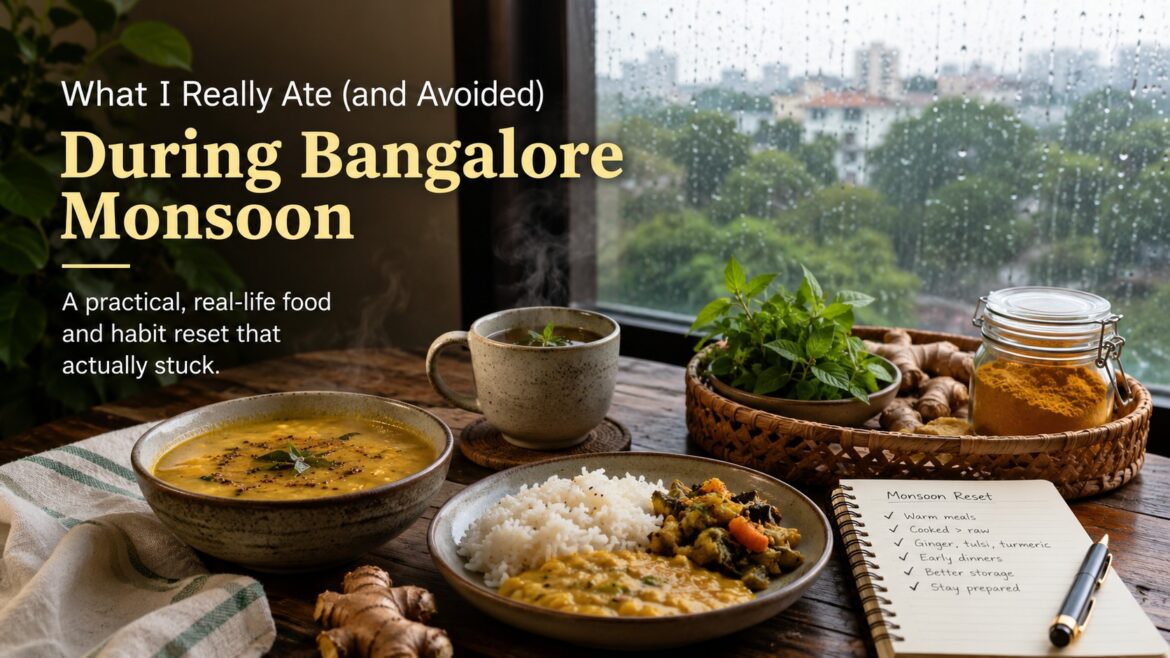
Every year around late May, I make the same promise to myself: this is the monsoon I don’t end up sluggish, sniffly, and living on filter coffee and biscuits by July. And every year, I break it by week two. This year I actually tracked what I was eating and doing differently once the rains hit Bangalore, mostly because I got tired of feeling run-down every single season and wanted to know if it was really the weather or just bad habits creeping back in. Turns out, it was mostly the habits — and once I paid attention, the fixes were smaller than I expected.
During Bangalore’s monsoon, I shifted toward warm, freshly cooked meals over raw or chilled food, added ginger, turmeric, and tulsi into daily cooking rather than as occasional add-ons, cut back on street-side raw salads and juices, and made hot water and herbal infusions my default drink instead of cold water. The routine changes mattered as much as the food — earlier dinners, dry storage for spices, and layering a light jacket for the sudden temperature drops after rain.
Key Takeaways
- Warm, freshly cooked food replaced most raw and chilled options during the wettest months
- Ginger, turmeric, and tulsi moved from “occasional” to daily cooking staples
- Street-side raw salads, cut fruit, and juices were paused until the rains eased
- Warm water and herbal infusions became my preferred drinks during cooler rainy days
- Kitchen prep changed too — airtight spice storage, earlier dinners, no over-buying perishables
- Not everything worked — a few “wellness” habits I tried got dropped within a week
What Changed in My Meals
The biggest shift was temperature, not ingredients. I’d been eating a lot of the same salads and cold dals through summer, and carried that straight into monsoon without thinking about it. Once the rain started, I noticed I felt heavier and more tired after those same meals — nothing dramatic, just enough to make me swap them out.
Soups and stews became a near-daily thing. A simple moong dal soup with black pepper and ginger, or a vegetable rasam, replaced what used to be a raw salad on the side. I leaned on seasonal vegetables that show up in Bangalore markets this time of year — drumstick, pumpkin, and the first of the local greens — cooked rather than raw.
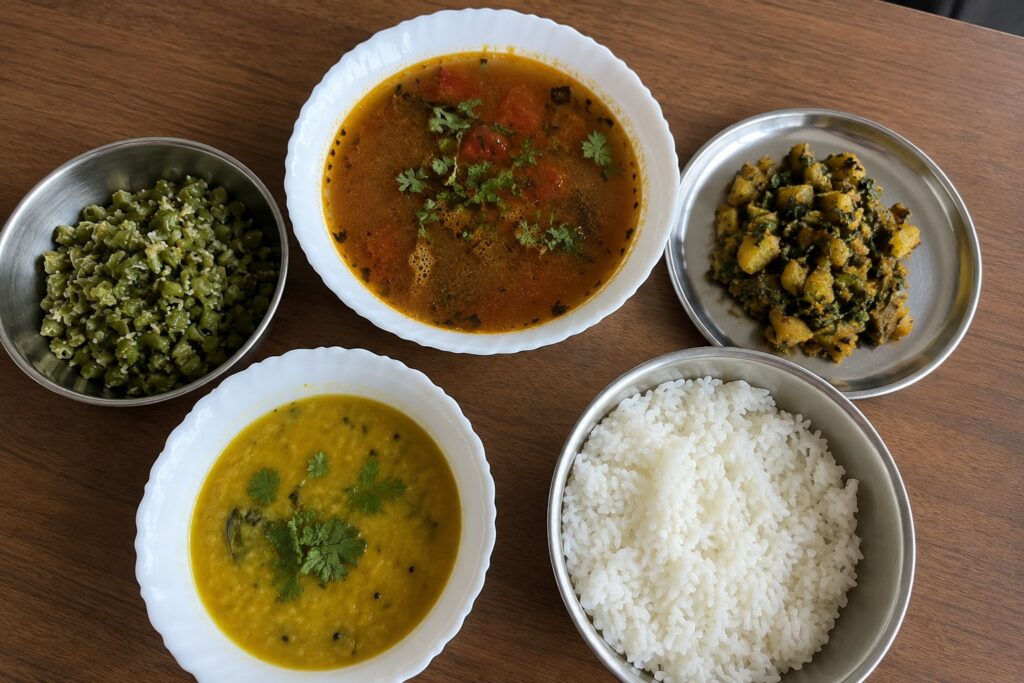
Ginger, turmeric, and tulsi went from occasional ingredients to regular parts of my kitchen routine. Fresh ginger went into most sabzis and my morning tea, while turmeric became something I routinely added to dal and rice rather than saving it for the occasional golden latte. I also started keeping a small tulsi plant on the kitchen windowsill so I could pick a few fresh leaves for tea without making a grocery run in the rain. I wasn’t treating any of these as a remedy or supplement — I simply liked the flavors and found them easy to work into meals and drinks.
Street food didn’t disappear entirely — I’m not going to pretend I gave up filter coffee from my usual stall — but raw-cut fruit, juices, and salads from carts were the first things I paused. It wasn’t because raw food is inherently unsafe during monsoon. I was more concerned about how produce was washed, handled, cut, and stored before I ate it, especially when it had been sitting out for a while. At home, I could wash whole fruit properly and prepare it fresh, so those stayed in my routine.
A Typical Monsoon Day in My Kitchen
I didn’t follow a fixed monsoon meal plan, but my everyday meals gradually settled into a pattern that felt comfortable during rainy days.
| Time | What I usually have |
|---|---|
| Morning | Breakfast with tea, often with fresh ginger |
| Mid-morning | Water or a piece of whole fruit |
| Lunch | Rice, dal and cooked vegetables |
| Evening | Tulsi tea or warm water |
| Dinner | An earlier, lighter meal such as dal, rasam or cooked vegetables |
The important part for me wasn’t following the table perfectly. It was having a few easy defaults so I wasn’t reaching for biscuits, packaged snacks or another cup of coffee just because it was raining outside.
What Changed in My Routine
Food was half of it. The other half was just timing and small habits around the kitchen.
Dinner moved earlier, closer to 8pm instead of 9:30pm, mostly because the evenings feel shorter once it’s raining and dark by 7. Eating earlier also meant I wasn’t going to bed on a heavy meal, which made mornings noticeably easier.
Hydration habits shifted too. Once the weather turned cooler, I found myself reaching for warm water with a slice of ginger or a cup of tulsi tea more often than cold water from the fridge. There wasn’t anything magical about the temperature of the drink — I simply enjoyed warm drinks more in rainy weather, which made it easier to sip regularly throughout the day instead of waiting until I was thirsty.
On the practical side, humidity plays havoc with a Bangalore kitchen. I switched all my spice jars to airtight containers after losing half a batch of jeera powder to clumping in June. I also stopped over-buying perishables. An overstuffed fridge makes it harder for cool air to circulate properly, and I was throwing out more vegetables than I wanted to admit.
Outside the kitchen, I started keeping a light jacket or shawl in my bag. Bangalore’s monsoon evenings can feel noticeably cooler after a downpour, and I personally noticed that getting caught outside in wet clothes often left me feeling rough the next morning. So carrying a light jacket or shawl became one of those small habits that was easy to keep.
What I Stopped Doing
A few things I tried didn’t earn a place in the routine.
I attempted a daily “kadha” (a spiced decoction popular in monsoon wellness content) for about ten days and dropped it — not because it did anything wrong, but because I didn’t enjoy making or drinking it enough to keep it up, and a routine you dread doesn’t last. Tulsi tea, which I actually like the taste of, stuck around instead.
I also tried cutting all raw food entirely, including fruit at home, and found that overcorrection. Raw fruit at home, washed and eaten fresh, wasn’t the issue — it was specifically the raw, cut, cart-sold produce sitting out in humid air for hours that I wanted to avoid. So I kept apples and bananas in the regular rotation and only paused the street-cart version.
What I Didn’t Change
I also learned that a monsoon reset didn’t have to mean changing everything.
- I didn’t eliminate fruit. Washed, whole fruit at home stayed in my routine.
- I didn’t start taking supplements or herbal products specifically for monsoon.
- I didn’t completely stop eating outside. I simply became more selective about ready-to-eat raw foods.
- I didn’t follow a strict meal plan. My usual rice, dal, vegetables and other familiar meals stayed.
- I didn’t treat ginger, turmeric or tulsi as medicines. I used them because I liked them and they were easy to add to everyday cooking.
- I didn’t force myself to eat only hot food. Warm meals simply became more appealing when the weather was cool and rainy.
Looking back, that was probably why the changes stuck. I wasn’t trying to follow a perfect monsoon diet; I was making a few small adjustments that fitted into the way I already ate.
Pre-Monsoon Habit vs. Monsoon Swap
| Pre-Monsoon Habit | Monsoon Swap |
|---|---|
| Cold water through the day | Warm water or tulsi tea |
| Raw salads with meals | Cooked vegetable sides, soups, rasam |
| Street-cart cut fruit and juice | Washed whole fruit at home |
| Occasional ginger/turmeric use | Regular use in cooking |
| Loose spice storage | Airtight containers |
| Dinner around 9:30pm | Dinner closer to 8pm |
| No jacket in bag | Light layer for post-rain temperature drops |
Conclusion: My Monsoon Reset Was Smaller Than I Expected
I started this monsoon expecting that I’d need to completely rethink what I ate. Instead, the changes that actually stuck were fairly ordinary: more freshly cooked meals, fewer street-side raw foods, a few warmer drinks, better food storage and slightly earlier dinners.
I also learned that I didn’t need a strict “monsoon diet” to feel more comfortable during the rainy season. Keeping whole fruit, familiar home-cooked meals and the occasional coffee in my routine made the changes much easier to maintain.
For me, the useful part of a seasonal reset wasn’t following a perfect list of foods to eat or avoid. It was noticing which small habits weren’t working and changing those first.
FAQ
Do I need to completely avoid raw food during monsoon?
No. I didn’t find that necessary. I continued eating washed, whole fruit at home and prepared vegetables normally. What I changed was buying raw-cut fruit, juices and salads from street stalls, where I had less control over how the food was washed, handled and stored.
Is it better to eat cooked food during monsoon?
For me, cooked meals simply became easier and more appealing during rainy weather. Soups, dal, rasam and cooked vegetables replaced many of the salads I used to eat. That was a personal preference rather than a rule that everyone needs to follow.
What foods should I be careful with during Bangalore’s monsoon?
I paid more attention to ready-to-eat foods whose preparation and storage I couldn’t control, particularly cut fruit, fresh juices and raw salads from street stalls. At home, I continued eating fresh fruit and vegetables after washing and preparing them myself.
What did I drink instead of cold water?
Mostly warm water with ginger and tulsi tea. I preferred these drinks when the weather was cooler, and I found them easier to sip regularly throughout the day.
Should I stop eating fruit during monsoon?
No. I didn’t. Whole fruit that I washed and prepared at home stayed in my regular rotation. My concern was mainly with cut fruit that had already been prepared and left exposed at a street stall.
Did I take any supplements?
No. Everything here was a food or routine change, not a supplement or medication routine. This is what worked for me personally, not a prescription for anyone else.
Is this routine specific to Bangalore?
The basic idea could work anywhere with a rainy season, but the details are specific to my Bangalore experience — the local produce, sudden cooler evenings after rain, street-food habits and the practical kitchen changes I made.

Rohini writes about home styling, beauty, fashion, food, and travel from Bangalore, India — drawing on her background in interior styling and years of testing what actually works in real homes and everyday routines. Every recommendation here comes from something she’s personally tried, not aggregated advice.