Every evening in Kerala, you’ll find a familiar scene. A tea stall crowded with people, small slips of paper in their hands, and conversations buzzing with hope: “What if today is my day?” This is the heartbeat of the Kerala State Lottery, a system that has grown from a single draw in 1968 into a lifeline for lakhs of people today.
Quick FAQ (snap answers)
Can I buy Kerala lottery tickets online? Physical tickets and agent sales are primary; online sales have been restricted historically. Check current Directorate notices.
Where do I claim small prizes? District lottery offices or authorised centers handle small payouts. Large prizes go to the Directorate.
How long do I have to claim? Usually limited (commonly 30–90 days); confirm on ticket or official notice.
Are draws public? Yes — draws are conducted publicly with observers and mechanical machines.
Let’s walk through the journey of a ticket — from the moment it’s bought to the moment a winner claims their prize.
Buying the Dream
Ravi, a daily wage worker in Thrissur, stops by a street vendor on his way home. Among the colourful stacks of tickets, he picks one for ₹40 — small enough not to hurt his pocket, but big enough to spark a dream. He knows that Kerala now runs seven weekly lotteries, along with six bumper draws a year. The weekly ones bring small but steady chances, while the bumpers — like the Onam Bumper — have jackpots that can run into crores of rupees.
“Most people spend the cost of a cup of tea,” says one veteran ticket seller. “But they buy the ticket for the hope, not just the prize.”
Types of Lotteries Kerala runs
-
Weekly lotteries: Kerala runs multiple weekly draws (commonly seven different lotteries across the week).
-
Bumper lotteries: Big-ticket, seasonal events — usually held around festivals (Onam, Vishu, Christmas, New Year) and often pay very large jackpots. Kerala runs several bumper draws each year.
-
Monthly / Special schemes: There are also occasional monthly or special-ticket schemes. (Exact names and timing can vary by year.)
Buying a Kerala ticket — where and how
-
Official agents and authorised retail outlets are the primary sales channels. You’ll find tickets at small kiosks, magazine shops, and lottery agents across the state.
-
Online sale: Traditionally, Kerala’s paper lottery system is based on physical tickets sold by agents. (Online sale rules have been restrictive at times — physical tickets remain the norm.)
-
Ticket price: Varies by lottery. Small weekly tickets are low-cost; bumper tickets cost more because of higher prize pools. (Check the ticket itself or the Directorate notice for current prices.)
The Ticket Itself
Ravi checks his ticket. It’s got a series code (a letter combination) and a number that makes his ticket unique. Printed boldly are the draw date and price, along with Kerala’s official seal. These tickets aren’t ordinary slips of paper — they carry security marks, barcodes, and watermarks to stop counterfeits.
He carefully writes his name on the back. It’s a small act, but an important one — if luck smiles on him, his signed ticket is his only proof of claim.
Also read, the history of Kerala lottery
The Draw Day Excitement : How the draw is conducted
At exactly 3 PM, crowds gather in local halls or tune into live updates. The Directorate of State Lotteries, headquartered in Thiruvananthapuram, oversees everything. Officials set up mechanical draw machines — drums filled with numbered balls.
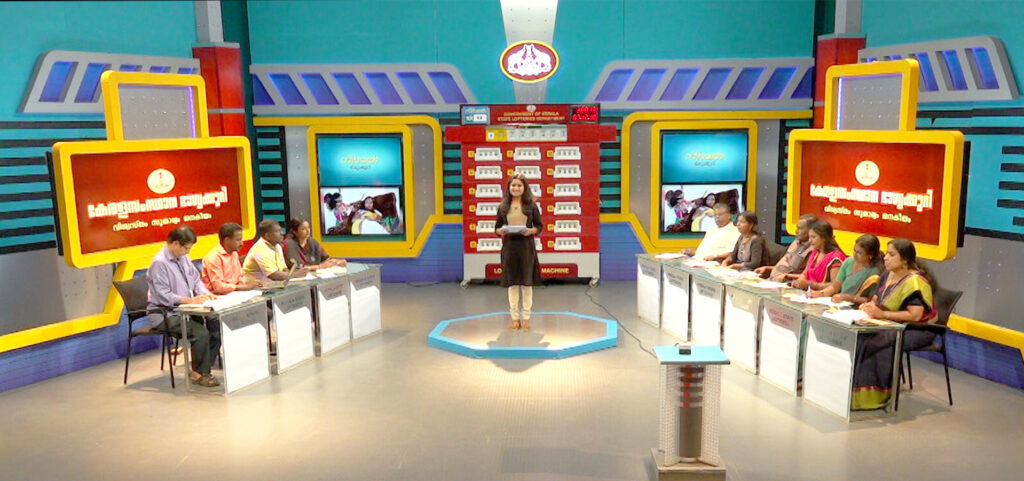
Observers, judges, and sometimes even schoolchildren are invited to spin the machines. The tension is real: a hush falls when the balls drop, and the winning number is announced. Kerala takes transparency seriously — every draw is public, supervised, and recorded. If a ticket number drawn has not been sold, the process is repeated to ensure fairness.
The Results
By evening, newspapers, websites, and notice boards across Kerala display the results. Ravi hurries to check his ticket against the winning list. He knows the odds are slim — but hope is stronger than mathematics.
“Even if I don’t win today, there’s always tomorrow,” he says, echoing the sentiment of thousands of players across the state.
Claiming the Prize
Now imagine Ravi’s number matches — he’s won ₹1 lakh. What happens next?
-
For small winnings, he could go to the district lottery office with his signed ticket, ID proof, and claim form.
-
For higher prizes, he must travel to the Directorate in Thiruvananthapuram. Large prizes require PAN card details, photographs, and a verification process.
-
Taxes bite into the winnings — by law, lottery prizes are taxed at source. But even after deductions, the joy of holding a cheque from the government is indescribable.
Kerala usually gives winners 30 days to claim their prize. Miss the deadline, and the dream slips away.
Behind the Scenes — The Agents
The reason lotteries are everywhere in Kerala is because of the 1.5 lakh agents and sellers who distribute them. These are ordinary men and women who earn their living from commissions. “It feeds my family,” says one agent in Ernakulam, “and sometimes, it makes someone else a millionaire.”
The system doesn’t just create winners — it creates jobs. Thousands of livelihoods are tied to selling and distributing these tickets.
More Than Just Luck
Every rupee spent on a ticket doesn’t just chase a jackpot — it helps fund Kerala’s welfare. The money goes into healthcare, education, and social schemes. For example, the Karunya Benevolent Fund, launched in 2012, is powered by lottery revenue and has helped thousands of patients afford medical treatment.
So even if Ravi doesn’t win, he knows his small purchase isn’t wasted. “It’s for the good of the state,” he tells himself.
A Culture of Hope
The Kerala lottery is not just a gamble. It’s a story of hope, a system of trust, and a part of the state’s culture. From a Re.1 ticket in 1968 to today’s multi-crore jackpots, it has come a long way.
For Ravi, and for millions like him, the ticket is more than paper — it’s a daily reminder that life can change with just one lucky number.