Every September, especially as September 5 approaches, students start getting the same assignment: give a Teachers’ Day speech — and figure out what to say without sounding like everyone else.
The good news is that a memorable Teachers’ Day speech doesn’t need to be long or complicated. It needs to be short, sincere and specific. A real memory, a small detail about a teacher, or one thing they’ve taught you can make a bigger impact than a long list of compliments.
For most classroom speeches, aim for 2–3 minutes, or roughly 250–350 words. Start with a clear greeting, explain why you’re celebrating Teachers’ Day, share one genuine thought or memory, thank the teacher or teachers, and finish with a line that feels worth remembering.
Whether you’re a student preparing for a classroom speech, a class representative speaking at a school assembly, or a teacher responding to students, the templates and tips below can help you put together something that sounds natural rather than rehearsed.
What Makes a Good Teachers’ Day Speech?
The best Teachers’ Day speeches don’t try to say everything. They focus on one clear feeling, one specific detail and one sincere thank-you.
Instead of saying, “My teacher is very kind and supportive,” mention something that actually happened. Maybe your teacher stayed back after class to explain a difficult topic, encouraged you after a poor result, or always had a funny way of starting the first lesson of the day.
That small detail makes the speech personal. It also helps it sound like something you actually said rather than something copied from the internet.
Keep It Short
For most school speeches, 2–3 minutes is enough. A shorter speech with a clear message is usually more effective than a five-minute speech that repeats the same compliments.
Make It Personal
Think of one moment, habit or quality that makes your teacher memorable. You don’t need a dramatic story. Even a small classroom moment can give your speech personality.
Sound Like Yourself
Don’t use words or phrases you would never normally say. A simple, honest sentence delivered naturally will usually connect better than overly formal language.
End With a Clear Thank-You
Don’t let the speech simply fade out. Finish with a direct message of appreciation. If possible, connect it to the specific quality or memory you mentioned earlier.
A simple structure to remember is:
Greeting → Why Teachers’ Day matters → Personal example → Appreciation → Memorable closing
Teachers’ Day Speech Templates

The best template is one you can make your own. Replace the bracketed sections with a real teacher’s name, a genuine memory or something specific about your school experience.
1. Teachers’ Day Speech by a Student About a Teacher
Best for: classroom speeches, small groups or a personal thank-you.
Good morning/afternoon, everyone.
Today, I want to talk about someone who has made a real difference in my school life — [Teacher’s Name].
I still remember [specific memory or moment]. It may seem like a small thing, but it stayed with me because [why it mattered].
Teachers don’t just teach us subjects. They teach us how to think, how to keep trying when we get something wrong, and sometimes, how to believe in ourselves. [Teacher’s Name] has done all of that for me and for so many students.
So today, I simply want to say thank you — for your patience, your encouragement and everything you have taught us, both inside and outside the classroom.
Happy Teachers’ Day!
2. Teachers’ Day Speech for a School Assembly
Best for: student council members, class representatives and formal school events.
Respected Principal, teachers and my fellow students, good morning.
In India, Teachers’ Day is celebrated on September 5, the birth anniversary of Dr. Sarvepalli Radhakrishnan. It is a day to recognize the teachers who guide us, encourage us and help shape the people we become.
On behalf of the entire student body, I would like to thank our teachers — not only for the lessons in our textbooks, but also for the patience to explain something one more time, the encouragement to keep going after a setback, and the care they show every day.
We may not always say it, but we notice the effort you put in. Today, we want to say it clearly: thank you for everything you do.
Happy Teachers’ Day to all our wonderful teachers!
3. Short Teachers’ Day Speech for Younger Students
Best for: primary school and younger students.
Good morning, teachers and everyone.
Today is a special day because it is Teachers’ Day!
I want to thank my teachers for helping me learn new things, answering my questions and being patient with me every day.
You teach us more than just our school subjects. You also teach us to be kind, confident and hardworking.
Thank you for everything you do for us. Happy Teachers’ Day!
4. Teachers’ Day Speech by a Teacher
Best for: teachers responding to students during a Teachers’ Day celebration.
Thank you all so much for your kind words and wishes. They truly mean a lot to us.
Teaching is one of those professions where you don’t always get to see the impact of your work immediately. You teach, encourage and guide, often without knowing exactly where those lessons will lead.
To all my students, thank you for your questions, your curiosity, your laughter and even your occasional excuses for unfinished homework. Watching you learn and grow is one of the most rewarding parts of being a teacher.
Today is a reminder that education is something we build together. So here’s to another year of learning, growing and discovering new things — together.
Happy Teachers’ Day!
5. 1-Minute Teachers’ Day Speech
Best for: students who have been asked to say a few words on short notice.
Good morning, everyone.
Today, I would like to wish all our teachers a very Happy Teachers’ Day.
Thank you for teaching us, encouraging us and helping us become better students and better people. You are always there to answer our questions, guide us when we make mistakes and motivate us to keep trying.
We may not say it every day, but we truly appreciate everything you do for us.
Thank you for being our teachers, our guides and our inspiration. Happy Teachers’ Day!
Also read, B
How to Structure a Teachers’ Day Speech
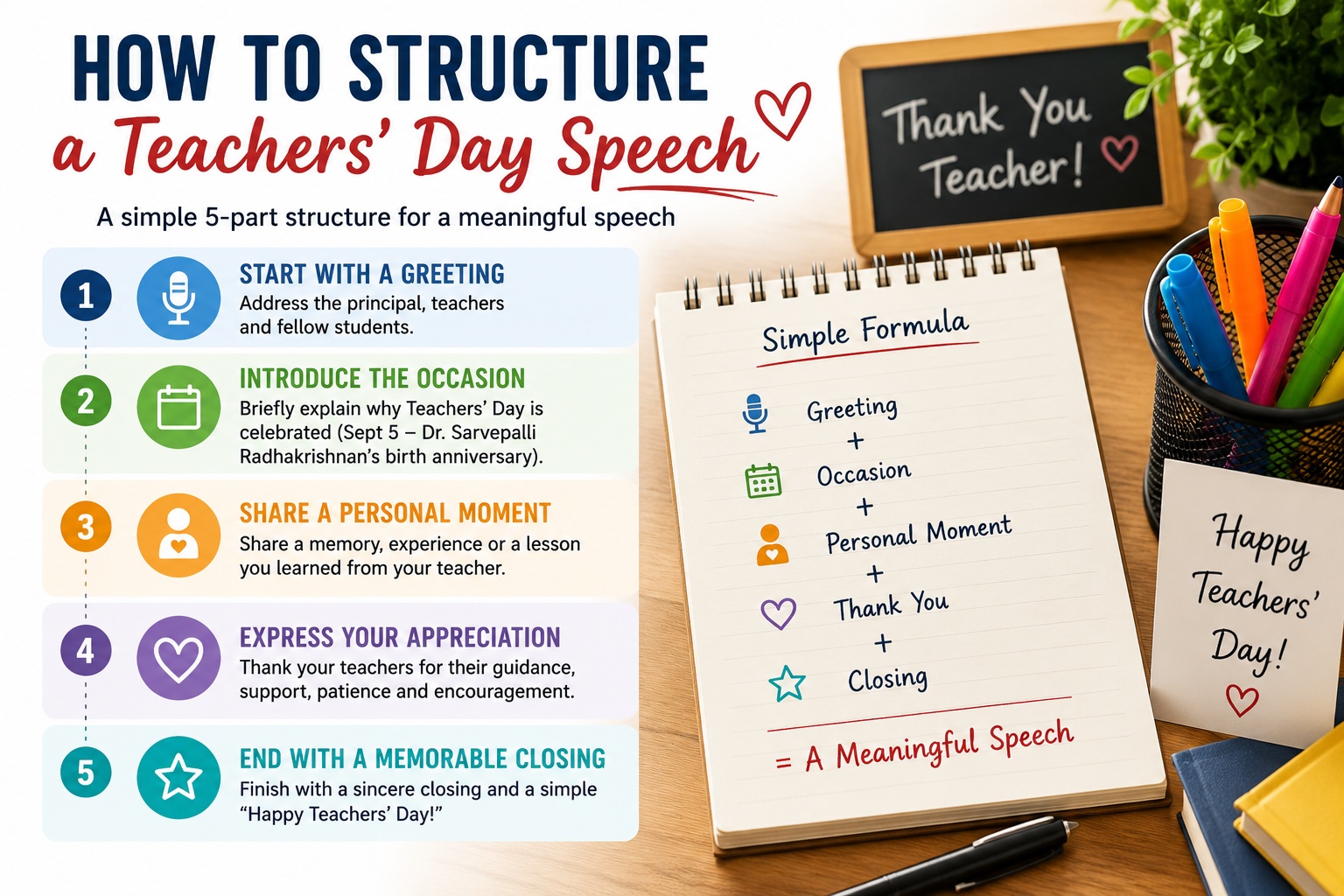
If you’re writing your own Teachers’ Day speech, you don’t need to start from scratch. A simple five-part structure is enough:
- Start with a greeting
Address the principal, teachers and fellow students, depending on the setting. - Introduce the occasion
Briefly explain why Teachers’ Day is being celebrated. In India, Teachers’ Day is observed on September 5 to mark Dr. Sarvepalli Radhakrishnan’s birth anniversary. - Share one personal thought or example
Mention a teacher, classroom moment or lesson that has stayed with you. This is what makes the speech feel genuine. - Express your appreciation
Thank teachers for something specific — their patience, encouragement, guidance or the effort they put into helping students learn. - Finish with a memorable closing
End with a sincere sentence and a simple “Happy Teachers’ Day!” rather than adding several extra lines.
A Simple Formula to Remember
Greeting + Occasion + Personal Moment + Thank You + Closing
This structure works for a short classroom speech as well as a more formal school assembly address. You can simply adjust the length and level of formality to suit your audience.
Tips for Delivering Your Teachers’ Day Speech
A well-written speech can still fall flat if you rush through it. On the other hand, a simple speech can make a strong impression when it feels natural and sincere.
- Use notes instead of memorizing every word. A small card with keywords can help you stay on track without making your delivery sound rehearsed.
- Slow down. Nervous speakers tend to talk faster than they realize. Leave small pauses between important points.
- Look up from your notes. Make eye contact with your audience, especially when thanking your teachers or delivering your final line.
- Practice out loud. Reading the speech silently isn’t enough. Speaking it aloud helps you catch awkward phrases and get comfortable with the timing.
- Pause before your final line. A brief pause creates a natural sense of closure and gives your last sentence more impact.
- Don’t aim for perfection. A genuine, slightly nervous speech is often more memorable than one delivered like a performance.
Conclusion
A good Teachers’ Day speech doesn’t have to be clever, lengthy or perfectly rehearsed. It just needs to be genuine.
Choose one thing you appreciate about your teacher, give it a specific example if you can, and say thank you in your own words. Whether you’re speaking for one minute in a classroom or several minutes at a school assembly, sincerity will do more for your speech than complicated language ever will.
So take one of the templates above, make it personal, practice it once or twice out loud, and go say what you actually mean.
Happy Teachers’ Day!
Frequently Asked Questions About Teachers’ Day Speeches
How long should a Teachers’ Day speech be?
A classroom Teachers’ Day speech should usually be 1–3 minutes, or roughly 150–350 words. A formal school assembly speech can be slightly longer, depending on the event and audience.
What should I say in a Teachers’ Day speech?
Start with a greeting, briefly explain the occasion, share a personal thought or memory, thank your teachers and finish with a sincere closing. One specific example is usually more effective than several generic compliments.
How do I start a Teachers’ Day speech?
A simple greeting is a good starting point. For a formal event, you could address the principal, teachers and students before introducing the importance of Teachers’ Day.
How do I end a Teachers’ Day speech?
End with a short, genuine message of appreciation. You can thank your teachers for something specific and finish with “Happy Teachers’ Day!” A brief pause before the final line can also make it more memorable.
Should I memorize my Teachers’ Day speech?
Not necessarily. If you’re comfortable memorizing it, that’s fine, but using a small card with keywords can help you sound more natural and reduce the risk of forgetting your lines.
What if I don’t know the teacher well?
Focus on what teachers do rather than inventing a personal story. You can talk about their patience, guidance, encouragement and the everyday effort involved in helping students learn.

Rohini writes about home styling, beauty, fashion, food, and travel from Bangalore, India — drawing on her background in interior styling and years of testing what actually works in real homes and everyday routines. Every recommendation here comes from something she’s personally tried, not aggregated advice.