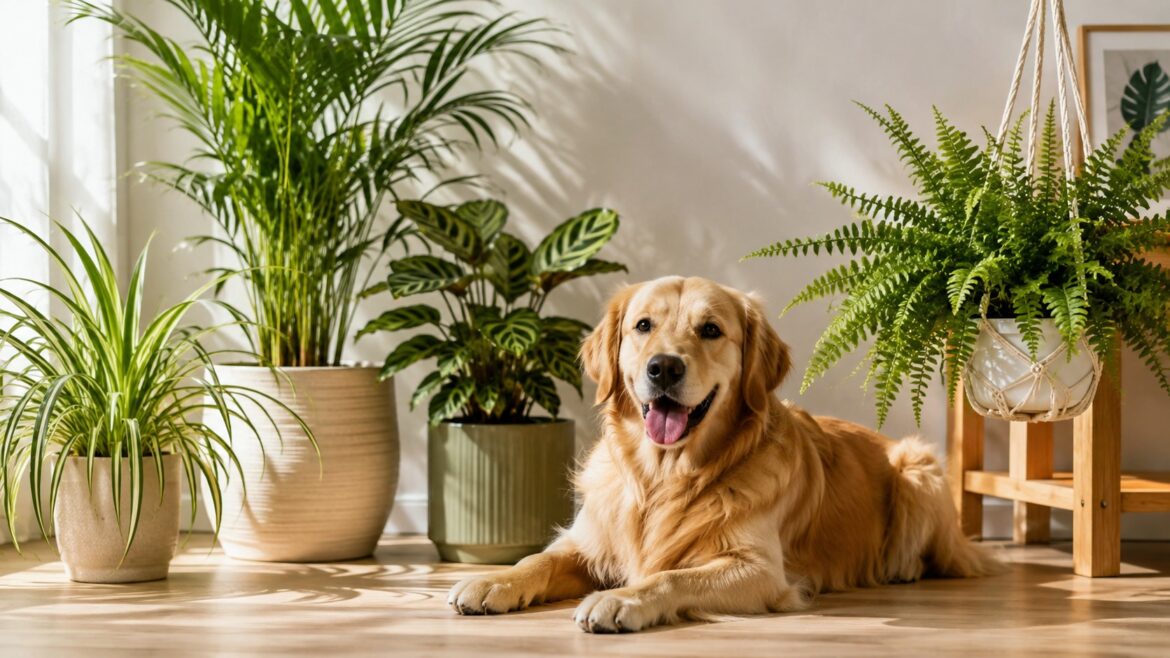
Most “pet-safe plant” lists stop at toxicity. They don’t tell you that a Boston fern gets flattened during a zoomies lap around the living room, or that a curious dog will treat a low hanging vine as a chew toy regardless of whether it’s technically non-toxic. I’ve been growing plants indoors with a dog in the house for a while now, and this is less a list and more a rundown of what’s actually held up.
Dog-safe indoor plants include spider plants, areca palms, calatheas, and Boston ferns, which the ASPCA lists as non-toxic to dogs. But choosing a non-toxic plant is only part of the equation. In a home with a curious or active dog, placement matters too. Plants within reach can be chewed, dug into, or knocked over, so the safest setup combines a dog-friendly plant with placement that keeps it out of your dog’s reach.
Safety note: A plant listed as non-toxic to dogs is not an invitation for your dog to eat it. Consuming plant material can still cause stomach upset, vomiting, diarrhea, or choking, depending on the plant and amount consumed. If your dog eats a houseplant and you’re unsure whether it is toxic, contact your veterinarian promptly and provide the plant’s name or a photo if possible.
Key Takeaways
- Non-toxic and dog-proof aren’t the same thing. A plant can be non-toxic to dogs and still be chewed, knocked over, or dug into.
- Placement matters as much as plant choice. Keep houseplants genuinely out of your dog’s reach, particularly if your dog is curious, energetic, or likes to chew.
- Spider plants and areca palms have worked particularly well for me. Both are relatively easy to care for and have held up well in my home.
- Some dog-safe plants still have practical drawbacks. Boston ferns, for example, may be non-toxic but can be easily knocked over when placed on low tables.
- Check more than the plant itself. Fertilizers, pesticides, insecticides, and other products used around houseplants can have separate safety considerations.
- Non-toxic doesn’t mean edible. If your dog eats a plant and you’re unsure whether it is toxic, contact your veterinarian promptly and identify the plant if possible.
A typical pet-safe plant list focuses almost entirely on toxicity. Living with a dog has taught me that there’s another side to the equation: whether the plant can actually survive sharing your home with an energetic, curious animal.
The problems I’ve run into aren’t usually about poisoning. They’re more often about everyday dog behavior:
- Chewing: Even non-toxic leaves can be shredded when a dog treats a plant as a chew toy. Repeated chewing can damage the plant and make it difficult for new growth to develop.
- Digging: Some dogs are attracted to the soil as much as the plant itself. A curious dog can scatter soil, damage roots, or pull a recently repotted plant out of its container.
- Knocking plants over: Floor plants, low tables, and lightweight pots are particularly vulnerable in high-traffic areas. An enthusiastic tail or a burst of zoomies can send a plant straight onto the floor.
- Eating soil or plant products: A plant may be non-toxic while fertilizer, pesticides, insecticides, or other products used around it have separate safety considerations.
- Reaching trailing leaves: Hanging or trailing plants can become tempting toys when leaves or vines hang within a dog’s reach.
That’s why I don’t look at plant toxicity alone anymore. A plant can be non-toxic to dogs and still be a poor choice for a particular spot in your home. The plant itself, where you put it, and your dog’s behavior all matter.
Plants I’ve Kept vs. Plants I Gave Up On
I’ve tried several indoor plants with a dog in the house, and I’ve learned that the best choices aren’t necessarily just the plants that appear on a non-toxic list. Care requirements, growth habits, and where the plant sits can make just as much difference.
Spider Plant
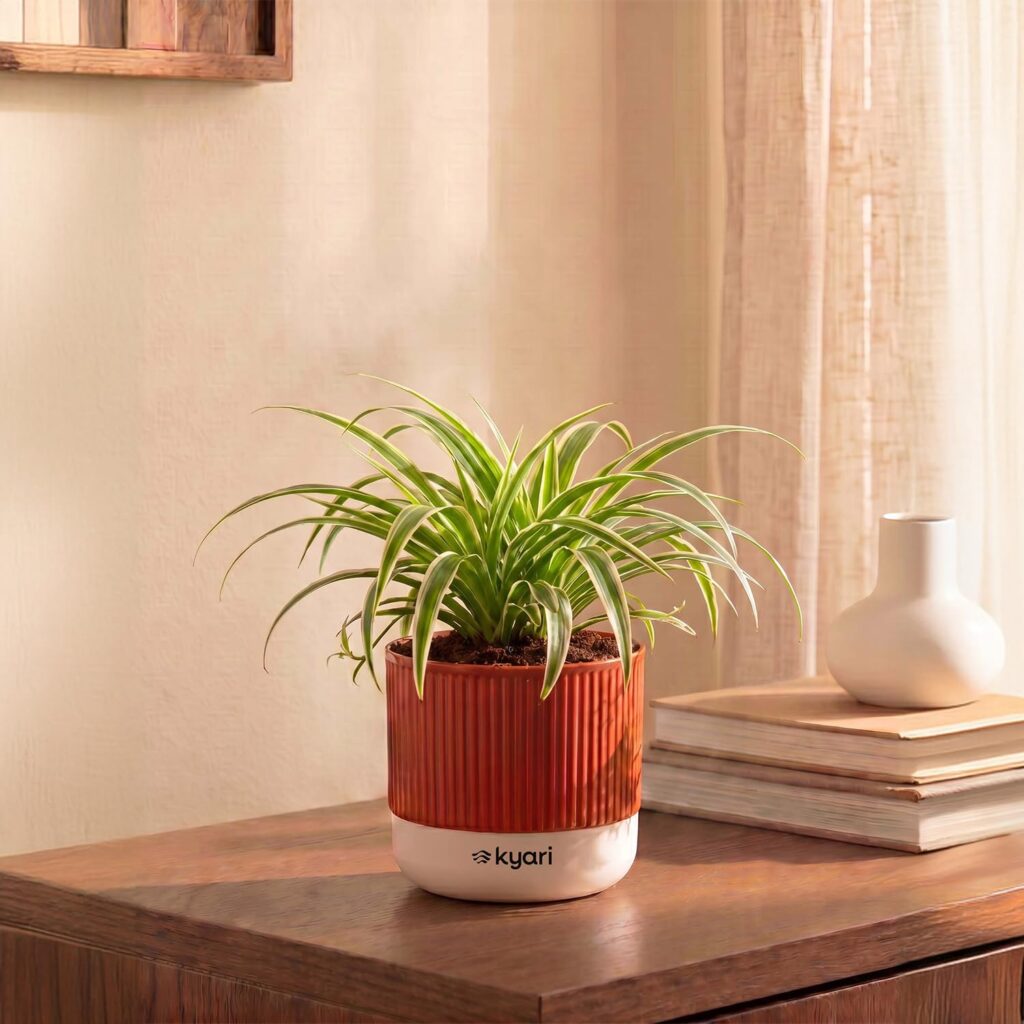
Dog safety: Non-toxic to dogs according to the ASPCA.
The spider plant has been one of my easiest plants to live with. Mine has been going strong for about two years, and it has tolerated plenty of missed waterings. My dog has shown relatively little interest in chewing it, which has helped it stay in good shape.
For a dog household, I’d still keep it somewhere your dog can’t routinely reach, particularly if yours likes to chew leaves. But overall, it’s one of the easier indoor plants I’ve had to manage.
Price: Around INR 200 (You can buy online from Amazon)
Areca Palm

Dog safety: Non-toxic to dogs according to the ASPCA.
The areca palm is another favorite. Its height gives it a practical advantage: when positioned properly, the lower fronds can remain out of casual reach while the plant still makes a noticeable addition to the room.
Mine has held up well despite being in an area where we walk past it frequently. The main thing I’d avoid is placing it in a narrow walkway where a dog can easily brush against or knock into it.
Price: Around INR 250 (Here is the link to buy online)
Calathea
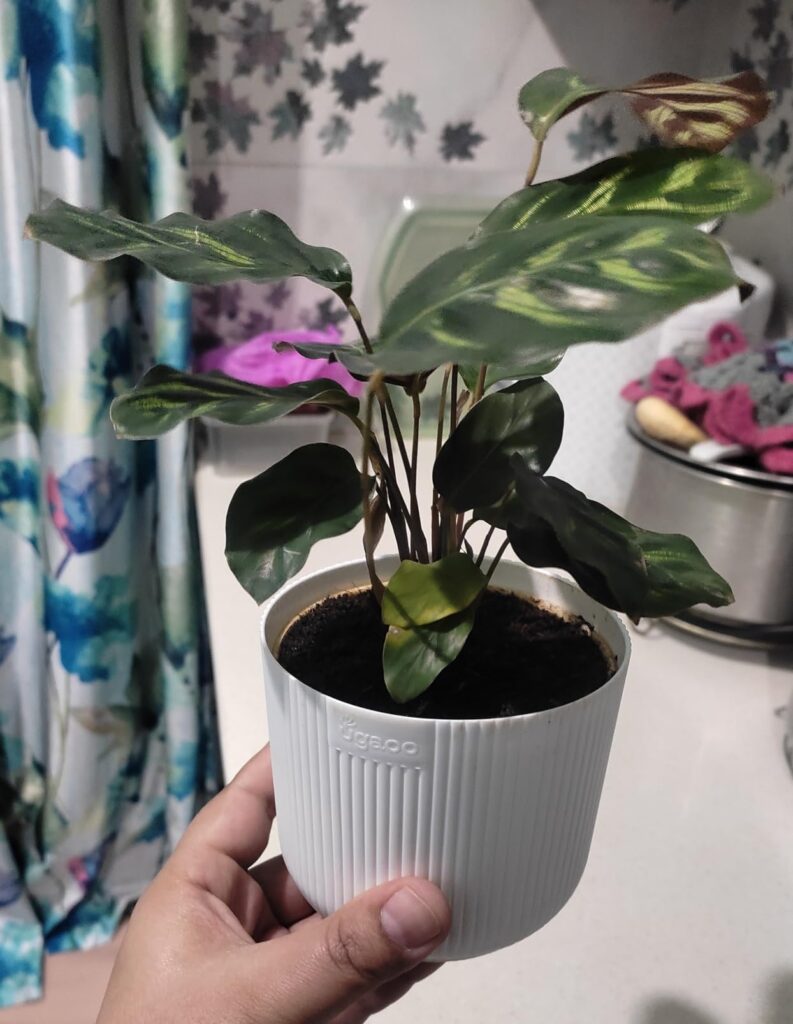
Dog safety: Non-toxic to dogs according to the ASPCA.
Calatheas have been more complicated for me, although the dog wasn’t really the problem. My apartment doesn’t naturally have as much humidity as the plant prefers, so I eventually moved mine to a bathroom shelf where conditions were better.
That experience is worth mentioning because a plant can be dog-safe and still not be a good fit for every room. If you have a curious dog, a humid bathroom shelf that is also out of reach can be a particularly practical location for a calathea.
Price: Around INR 250(Here is the link to buy online.)
Boston Fern
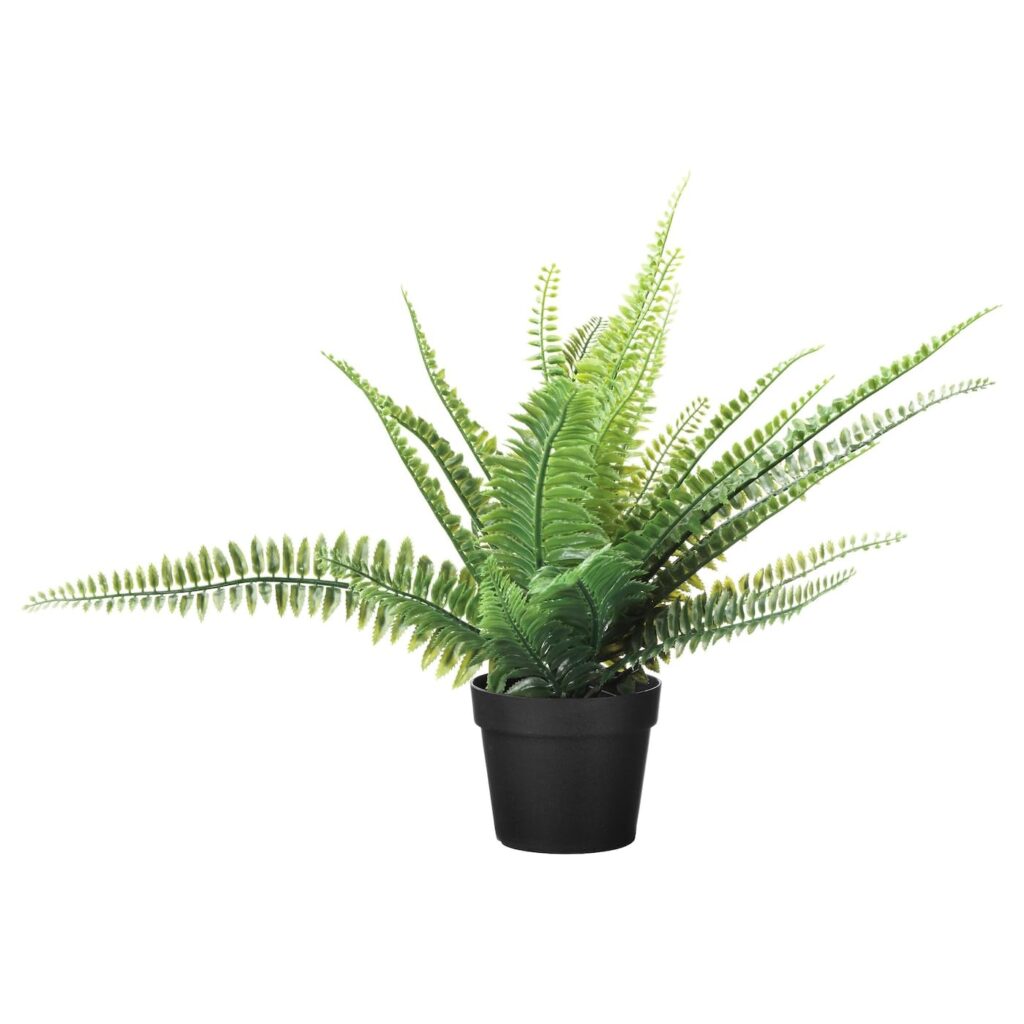
Dog safety: Non-toxic to dogs according to the ASPCA.
The Boston fern looked like an easy choice on paper, but placement made all the difference. I kept mine on a low side table for about three weeks before it was knocked over twice during play.
After moving it to a hanging planter, it did much better. The lesson for me was simple: a dog-safe plant isn’t necessarily a dog-proof plant. In a busy household, an elevated position can matter as much as the plant species.
Price: Around INR 150 to 200 (Link to buy online)
Pothos (Money Plant)
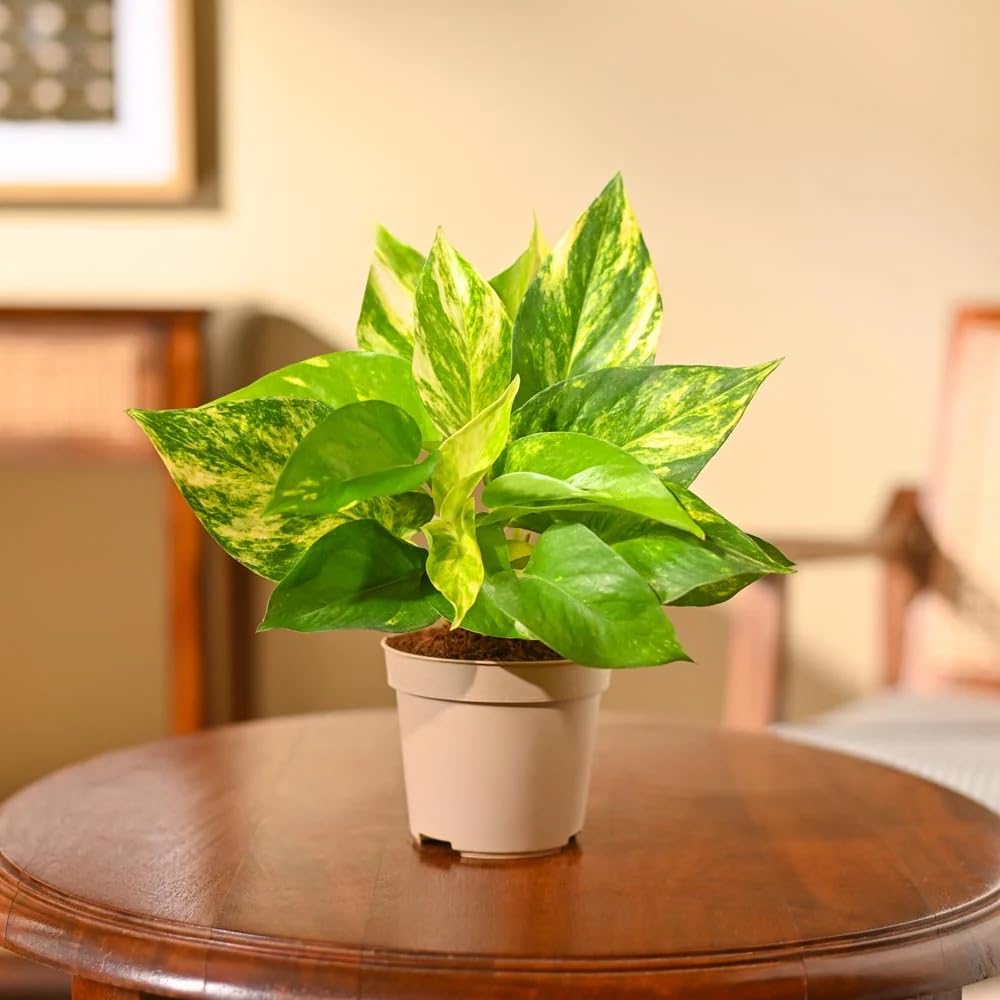
Dog safety: Toxic to dogs.
Pothos is the one I eventually stopped growing indoors. It’s commonly called a money plant, but unlike the plants above, pothos is not considered non-toxic to dogs.
There was also a practical problem: the trailing vines were immediately tempting for my dog to chew. Rather than trying to find a location where the vines would remain completely inaccessible, I decided it wasn’t worth the risk and discontinued growing it indoors.
If you have a dog that likes to chew or investigate trailing plants, I’d be especially cautious with pothos and choose a genuinely dog-safe alternative instead.
Price: Around INR 150 to 200 (Link to buy online)
Placement Tips for a Dog Household
Choosing a dog-safe plant is only half the job. Where you put it can determine whether it survives in your home — and whether your dog can get into trouble with it.
Keep plants genuinely out of reach
Use shelves, plant stands, or hanging planters that your dog cannot easily reach or jump onto. The right height depends on your dog’s size, jumping ability, and behavior, so there isn’t one measurement that works for every household.
Keep trailing plants away from dogs
Trailing leaves and vines can be particularly tempting for dogs that like to chew. If a plant grows downward, make sure the leaves and stems don’t eventually hang within your dog’s reach.
Keep plants away from high-traffic areas
A plant placed beside a doorway, along a narrow hallway, or next to your dog’s favorite play area is more likely to be knocked over. Moving it to a quieter corner can make a surprisingly big difference.
Choose stable, heavier pots
Lightweight pots are easier for an enthusiastic dog to knock over. A heavier, stable container can reduce spills and protect both the plant and your dog from a falling pot.
Keep soil and plant products inaccessible
Dogs that like to dig may be interested in the soil rather than the plant itself. Keep pots away from areas where your dog can easily investigate them, and store fertilizers, pesticides, insecticides, and other gardening products securely.
Consider your dog’s personality
There is no completely dog-proof plant placement that works for every dog. A plant that survives for years with one calm dog may last five minutes with a curious puppy that likes to chew and dig.
That’s why I’ve found it more useful to match the plant and its location to the dog’s behavior rather than relying on a generic list of “pet-safe” plants.
Comparison Table: Dog-Safe Indoor Plants
| Plant | Dog Safety | Best Placement | My Experience |
|---|---|---|---|
| Spider Plant | Non-toxic to dogs | Bright indoor spot, out of regular chewing range | Thriving for about two years; easy to maintain |
| Areca Palm | Non-toxic to dogs | Floor or stable stand where lower fronds stay out of reach | Held up well; minimal issues despite regular foot traffic |
| Calathea | Non-toxic to dogs | Humid location such as a bathroom shelf, away from the dog | Did better after being moved to a more humid room |
| Boston Fern | Non-toxic to dogs | Hanging planter or elevated, stable location | Struggled on a low table after being knocked over; much better when hung |
| Pothos (Money Plant) | Toxic to dogs | Best avoided in homes where dogs can access the plant | Discontinued because of toxicity and tempting trailing vines |
Final Thoughts: Choose the Plant and the Placement
Living with a dog has changed the way I choose indoor plants. I no longer look only at whether a plant is listed as non-toxic. I also think about whether my dog can reach it, whether the pot can be knocked over, whether the leaves are tempting to chew, and whether the plant actually suits the room where I want to keep it.
Spider plants, areca palms, calatheas, and Boston ferns have worked well for me, although each has different placement and care requirements. Pothos, on the other hand, was one I decided wasn’t worth keeping indoors because of its toxicity to dogs and its tempting trailing growth.
The simplest approach is to choose a plant that’s considered non-toxic to dogs, then put it somewhere your particular dog can’t easily reach or knock over. That’s what has worked best in my home.
FAQ About Dog-Safe Indoor Plants
Are spider plants safe for dogs?
Yes. Spider plants are listed as non-toxic to dogs by the ASPCA. They can still cause stomach upset if a dog consumes a large amount of plant material, so they should not be treated as edible. In my experience, spider plants have also been relatively easy to maintain around a dog.
What are the best indoor plants for homes with dogs?
Some popular dog-safe indoor plants include spider plants, areca palms, calatheas, and Boston ferns. The best choice depends not only on toxicity but also on your dog’s behavior, the plant’s care requirements, and where you can safely place it.
Are calatheas safe for dogs?
Yes. Calatheas are generally listed as non-toxic to dogs by the ASPCA. They can still be damaged by chewing, and they may require more humidity than some other indoor plants. I found that moving mine to a bathroom shelf gave it better growing conditions while also keeping it away from the dog.
Are Boston ferns safe for dogs?
Yes. Boston ferns are listed as non-toxic to dogs by the ASPCA. Their bigger challenge in a dog household may be placement rather than toxicity. I had better results after moving mine from a low side table to a hanging planter where it couldn’t easily be knocked over.
Is pothos toxic to dogs?
Yes. Pothos is toxic to dogs and should be kept completely out of their reach. Its trailing vines can also make it particularly tempting for dogs that like to chew. I ultimately stopped growing pothos indoors for both of these reasons.
Are hanging plants a good option for dog owners?
They can be. Hanging planters can keep leaves, stems, and soil out of a dog’s reach while also preventing the plant from being knocked over. However, make sure the plant is securely mounted and that growing vines don’t eventually hang low enough for your dog to reach.
Are non-toxic plants completely safe for dogs?
No. Non-toxic means the plant is not expected to cause poisoning, but it doesn’t mean dogs should eat it. Consuming plant material can still cause stomach upset or other problems. It’s also important to consider fertilizers, pesticides, insecticides, and other products used around the plant.
What should I do if my dog eats a houseplant?
First, identify the plant if possible and check whether it is considered toxic to dogs. If you’re unsure about the plant, your dog has eaten a potentially toxic species, or your dog is showing concerning symptoms, contact your veterinarian promptly. Avoid trying home remedies unless specifically recommended by a veterinary professional.

Rohini writes about home styling, beauty, fashion, food, and travel from Bangalore, India — drawing on her background in interior styling and years of testing what actually works in real homes and everyday routines. Every recommendation here comes from something she’s personally tried, not aggregated advice.