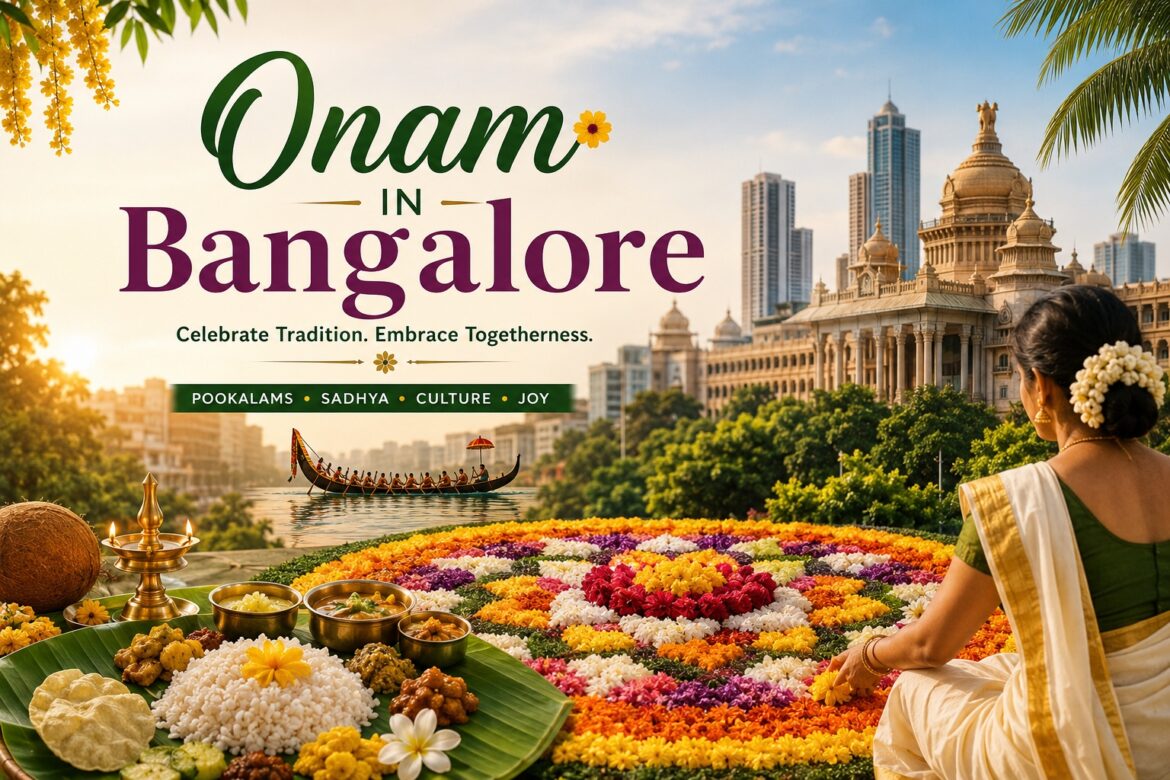
I’ve lived within a twenty-minute drive of Kammanahalli for years before I understood why the neighbourhood quietly turns into a different city every August. Kerala grocery stores I’d walked past a hundred times suddenly have queues out the door, tailors are pinning up kasavu sarees in their windows, and somewhere around Thiruvonam the smell of banana leaf and fried curry leaves takes over entire blocks. Bangalore doesn’t celebrate Onam like Kerala does, obviously, but it celebrates it seriously, and if you’re not part of the city’s large Malayali community, most of that happens just outside your radar. This is what I’ve actually seen and eaten, focused entirely on Bangalore.
Key Takeaways
- Bangalore has one of India’s largest Malayali populations outside Kerala, built over decades of migration for IT, healthcare, and hospitality work.
- Kammanahalli is the city’s real Onam centre — not the fine-dining hotel spreads, but the grocery stores, tailoring shops, and no-frills eateries that make the neighbourhood feel genuinely Kerala for the week.
- Sadya options span roughly ₹300 at neighbourhood eateries to ₹2,000+ at five-star hotel dining, and both ends are worth knowing about depending on what you’re after.
- Book dine-in Sadya at least a week ahead — popular spots sell out fast in the days around Thiruvonam.
- If you’re building out an Onam week, this pairs with my wishes and Malayalam phrases posts.
Why Bangalore Celebrates Onam Seriously
This isn’t a token nod to a neighbouring state’s festival. Malayalis have been moving to Bangalore in large numbers for generations now, and neighbourhoods like Kammanahalli, Koramangala, Indiranagar, and increasingly Whitefield have deep, established Malayali communities with their own grocery stores, associations, and event calendars. Apartment complexes with a decent Malayali resident base often run their own pookalam competitions in the shared lobby or lawn, and several tech parks host smaller in-office Onam celebrations during the week, complete with a flower-carpet contest and a catered Sadya for anyone who wants to sign up.
Kammanahalli: The Neighbourhood That Actually Feels Like Kerala
If you want to understand Bangalore’s Onam without a restaurant booking, just walk Kammanahalli Main Road during festival week. This is where the city’s Kerala grocery shops cluster, where you’ll find kasavu sarees and mundus in shop windows, and where the Sadya spots are less about ambience and more about getting the food genuinely right. It’s not polished or particularly photogenic — most of these are small, functional eateries — but it’s the most unfiltered version of Bangalore’s Onam that exists, and worth an afternoon even if you’re not eating there.
Where to Actually Eat: A Bangalore Sadya Guide
I’ve eaten at a few of these myself over the years and cross-checked the rest against what’s consistently recommended by Bangalore’s own food writers, but festive-week menus, dates, and prices shift year to year — always confirm directly with the restaurant before you plan around a specific date.
| Type | Where | What to Expect | Rough Price |
|---|---|---|---|
| Budget | Kammanahalli eateries (multiple, walk the main road) | No-frills, home-style Sadya, banana leaf, floor or bench seating | ₹250–₹350 |
| Budget-mid | Kuttanadu Restaurant, Koramangala 5th Block | Home-style Kerala Sadya, a longtime Koramangala regular | ₹300–₹500 |
| Mid-range | Moplah’s, Koramangala | Malabar-style cooking, popular enough to need advance booking | ₹600–₹900 |
| Mid-range | Salt Mango Tree, Indiranagar | Generous, homely Kerala spread, dine-in and takeaway | ₹700–₹1,000 |
| Mid-range | The Filter Coffee (Indiranagar, Koramangala, Kalyan Nagar, Brookfield) | Multi-day festive menus, reliably well-reviewed | ₹700–₹1,200 |
| Fine dining | Karavalli, Vivanta Bengaluru (Residency Road) | Established coastal-Karnataka-meets-Kerala fine dining, a proper occasion Sadya | ₹2,000+ |
| Fine dining | Dakshin, ITC hotels | Elaborate, decorated, live-performance festive setting | ₹2,000+ |
The Moplah’s Sadya is the one I keep coming back to personally — I’ve gone twice now, both times fully booked out by the time I remembered to reserve, so if you’re set on it, call at least a week ahead rather than the couple of days I usually try to get away with.
Beyond the Restaurant: How the City Actually Marks the Day
A genuine chunk of Bangalore’s Onam happens outside restaurants entirely, and it’s a bigger, more organised scene than I expected before I actually went looking.
Onam Chantha (Kerala Samajam, Dooravani Nagar) is the one worth knowing about first. It’s a proper flea-market-style fair that’s been running since 1984 — not a one-off pop-up — held over four days in the run-up to Thiruvonam at Jubilee English High School in NRI Layout. Around 50 stalls sell everything from banana chips and payasam ingredients to banana leaves, coir products, and textiles, and it draws people from well beyond the immediate neighbourhood. If you want a single event that captures Bangalore’s Malayali community organising for itself, rather than a restaurant packaging the festival for a general audience, this is it.
The concert and events calendar has genuinely grown too. MG Sreekumar — a major Malayalam playback singer — is doing a live “Malluminati: Onam Edition” show at Forum South Bengaluru, priced ₹599–1,499, which is a real marker of how big Bangalore’s Malayali audience has become; acts of that stature don’t tour for small crowds. On the more experiential end, Onam Village at Ranch, Big Banyan Vineyard and Resort (just outside the city, in Nelamangala) runs a themed day built around a recreated Kerala village setting, at ₹999–7,618 — closer to a curated outing than a straightforward meal or concert. There’s also a livelier, nightlife-adjacent layer — Onam-themed DJ nights and after-parties around Thiruvonam week — if that’s more your scene than a Sadya or a cultural evening.
At the neighbourhood level, Malayali associations run cultural evenings in the lead-up to Thiruvonam, with Thiruvathira dance performances and, in some years, screenings of the Kerala boat races for anyone who can’t make the trip. Several apartment complexes with active resident associations run their own pookalam competitions, judged informally by whoever’s willing to walk the block and vote, and it’s genuinely one of the nicer, more community-feeling versions of the festival if you happen to live in one of those complexes. If you don’t, most are still visible from the common areas if you’re curious enough to wander through on the day.
One thing you won’t find here, and it’s worth saying plainly rather than leaving a gap: Theyyam. It’s a spectacular ritual art form, but it belongs to North Kerala’s temple calendar — mainly Kannur and Kasaragod — performed at specific shrines roughly October through May. It isn’t traditionally part of Onam even in Kerala itself, so its absence from Bangalore’s Onam programming isn’t a diaspora gap, it’s just not the right festival for it. If you want to see Theyyam, that’s a separate Kerala trip, not an Onam-week detour.
Home delivery Sadya has also become a real category here, not an afterthought — several of the restaurants in the table above offer boxed Sadya for four to six people, useful if you’d rather host at home than book a table, though I’d still rate dine-in as the better experience if you can manage it. A packed Sadya box loses some of the ritual of banana-leaf, floor-seated eating that’s honestly a big part of what makes the meal work.
A Few Practical Notes
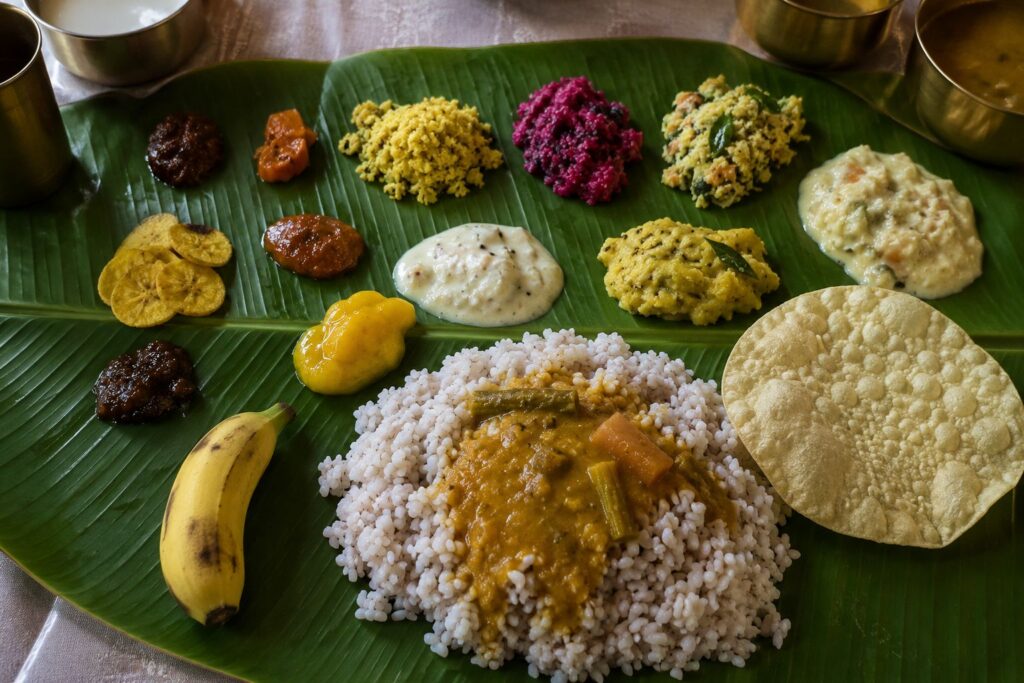
Book dine-in at least a week out for anywhere popular — Moplah’s, Karavalli, and the hotel spreads all tend to fill up fast once Thiruvonam approaches. If you’re going the Kammanahalli route instead, you generally don’t need a reservation, but do go early; the best-regarded spots run out of certain dishes by early afternoon on the bigger festival days. And if you’re eating a full Sadya for the first time, pace yourself — it’s genuinely 20-plus dishes on one leaf, and the payasam at the end deserves room.
FAQ
Where is the best place to eat Onam Sadya in Bangalore? It depends on what you want. Kammanahalli’s smaller eateries are the most authentic and affordable option, Moplah’s and Salt Mango Tree are strong mid-range choices, and Karavalli or a five-star hotel spread is the pick for a proper occasion meal.
How much does an Onam Sadya cost in Bangalore? Roughly ₹250–₹350 at neighbourhood eateries in Kammanahalli, ₹600–₹1,200 at popular mid-range restaurants, and ₹2,000 or more at fine-dining and five-star hotel spreads.
Do I need to book in advance for an Onam Sadya in Bangalore? Yes, ideally a week or more ahead for popular restaurants — dine-in slots around Thiruvonam fill up quickly.
Is Bangalore a good place to experience Onam if I’m not Malayali? Yes. Between Kammanahalli’s neighbourhood atmosphere and the range of restaurant Sadyas across the city, it’s a genuinely accessible way to experience the festival without travelling to Kerala.
Are there non-food Onam events in Bangalore, like concerts or cultural shows? Yes — Bangalore’s Onam calendar includes concerts (playback singer MG Sreekumar has performed a dedicated Onam show), the long-running Onam Chantha fair by Kerala Samajam Dooravani Nagar, themed venue events, and neighbourhood cultural evenings with Thiruvathira dance.
Can I see Theyyam performances during Onam in Bangalore? No — Theyyam is a North Kerala ritual art tied to specific temples in Kannur and Kasaragod, performed roughly October through May. It isn’t traditionally part of Onam, even in Kerala, so it doesn’t feature in Bangalore’s Onam events either.
Rohini writes about interior styling, travel, and everyday living from Bangalore, testing everything she recommends before she recommends it. [Standard author bio block goes here — let me know if you want me to pull the version on file.]

Rohini writes about home styling, beauty, fashion, food, and travel from Bangalore, India — drawing on her background in interior styling and years of testing what actually works in real homes and everyday routines. Every recommendation here comes from something she’s personally tried, not aggregated advice.