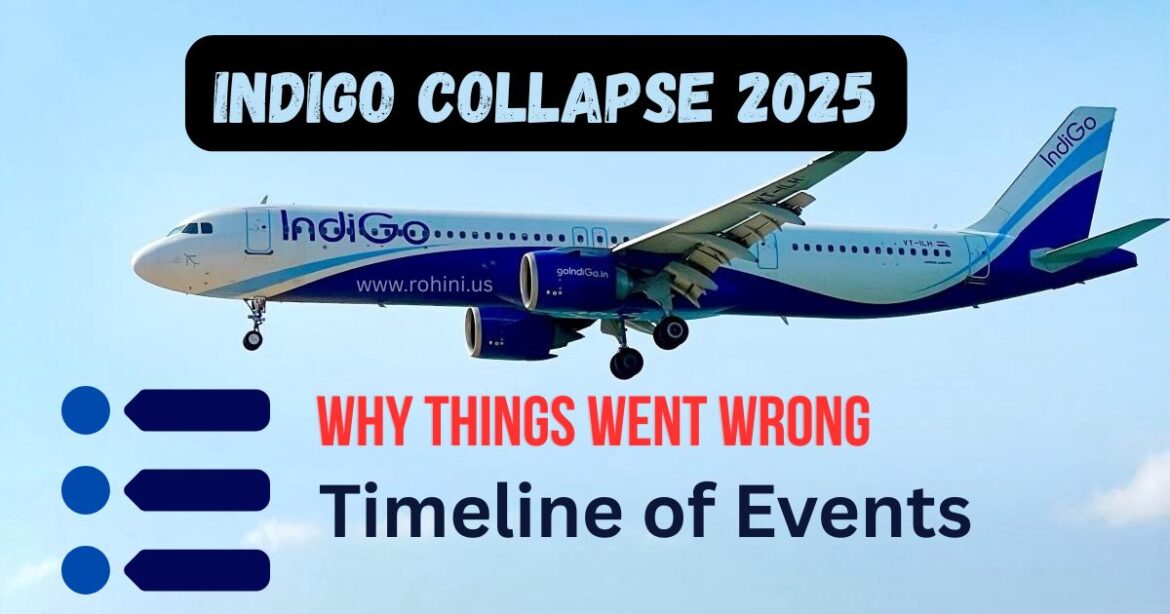
India’s aviation sector faced one of its biggest disruptions in recent history as IndiGo — the country’s largest airline — was hit by a massive wave of flight delays and cancellations in early December 2025. What began as routine scheduling pressure quickly escalated into a nationwide crisis, stranding thousands of passengers, triggering government intervention, and exposing deep flaws in crew-management and regulatory preparedness. From stricter pilot duty-time rules to unprecedented operational lapses, a perfect storm of factors brought the airline’s network to a standstill.
This timeline breaks down how the IndiGo crisis unfolded step-by-step, what caused the chaos, how authorities responded, and what it means for travelers and India’s aviation future.
✈️ What triggered the crisis — background
-
The root cause lies in stricter crew rest and duty-time rules introduced under DGCA’s (Directorate General of Civil Aviation) new Flight Duty Time Limit (FDTL) regulations. These rules mandate longer rest periods for pilots and limit night-flying hours — intended to reduce fatigue.
-
According to official sources, IndiGo — which handles a major share of domestic air travel — failed to adapt its crew schedules and resources to the new limits in time. That mis-planning set the stage for the disruption.
📅 Timeline of Disruption (Dec 2025)
| Date | What happened / Key developments |
|---|---|
| Early December — gradual stress | As the new rules started being enforced, there were warnings of potential scheduling pressure. But no major public disruption yet. |
| Dec 4, 2025 | Reports of growing cancellations and delays — first signs of disruption intensifying. By this date, issues were being publicly noticed. |
| Dec 5, 2025 — Crisis Peaks | This becomes the worst day: around 1,000+ flights cancelled nationwide in a single day. The total cancellations across the network reportedly crossed 2,100 flights by this date. Frustrated and stranded passengers led to chaos at major airports. |
| Dec 6, 2025 | Disruptions continue — flights cancelled although numbers drop slightly compared to Dec 5. In response to mounting pressure, the government intervened: fare-caps were imposed (to stop price gouging on alternate flights) and regulators began scrutiny of the airline. |
| Dec 7, 2025 | IndiGo cancels around 650 flights on this day. The airline announces that it now expects to normalise operations by Dec 10. On-time performance reportedly improved: the airline said ~75% on-time level. Also, significant remedial action — refunds totalling ~₹610 crore — were processed for affected passengers. |
| By Dec 7–8 (ongoing) | Airline claims to have restored services to 137 out of 138 destination-stations in its network — a clear recovery attempt. The crisis also led to regulatory pushback: the DGCA issued a show-cause notice to IndiGo’s CEO, seeking explanation for its failures in planning and operations. |
🔎 Why things went wrong — Key Causes & Mistakes
- The main trigger: the FDTL regulation requiring longer rest and limiting night-duty flights — which severely reduced the usable pilot/crew manpower per schedule.
- IndiGo reportedly did not re-arrange its pilot roster, flights, and crew assignments to match the new constraints — amounting to a planning and resource-management failure.
- Since IndiGo has one of the largest domestic market shares, the failure had a cascading effect across the national air-travel network — other airlines were less affected, but overall passenger smoke got outsized due to IndiGo’s dominance.
📣 Official & Regulatory Response + Passenger Impact
- The regulatory body (DGCA) issued a show-cause notice to IndiGo’s leadership — holding them accountable for “significant lapses in planning and oversight.”
- The government mandated that IndiGo process all refunds for affected passengers (cancellations/rescheduled flights) — and capped fares on alternate flights to prevent profiteering during the crisis.
- The airline launched a “crisis-management group,” committed to restoring operations and bringing its schedule back to normal.
- Many passengers were stranded: airports saw chaos, large queues, delayed flights, abrupt cancellations. Some travellers forced to take alternate transport (trains, buses), pay high fares, or suffer major inconvenience.
✅ Where Things Stand — Partial Recovery, But Watchful Eye
As of mid-December 7–8:
- IndiGo reports improved operations: about 75% on-time performance, and flights operating on 137 out of 138 of its network destinations.
- Several hundred crores worth of refunds (₹610 crore) have been cleared, showing attempt to mitigate passenger losses.
- The airline aims to fully stabilize by December 10, 2025.
- Meanwhile, regulators and public scrutiny remain — the show-cause notice remains, investigation and accountability are in progress.
🧑✈️ Broader Lessons & What This Means for Travellers
This crisis underscores several structural issues in aviation scheduling:
-
New pilot-safety regulations (while well-intended) need robust operational planning and phased implementation — airlines need buffer staffing and alternate scheduling when rules change.
-
Heavy reliance on a single airline (with large market share) introduces systemic risk: if that airline falters, the whole domestic aviation network suffers.
-
For passengers: when booking during seasons with heavy demand (festivals, wedding periods, holidays), it’s now more important than ever to keep tabs on flight status, use refundable tickets if possible, and have back-up travel plans.